Category: Guest posts
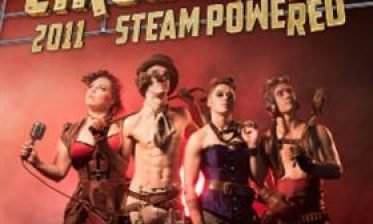
We live in an age of accomplishment, of bigger, better, and the only. Circus and humor are hardly immune to this credo of the modern age. Enter Circus Oz. What this reviewer thought was an allusion to the L. Frank Baum novel is, in actuality, a clever twist on the land from which the troupe is based, Australia. Oz stands for “Aussie,” which here becomes their own mystical land.
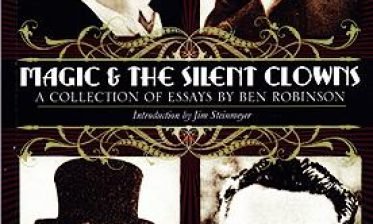
Ben Robinson’s decades of writing credits include the book Magic & the Silent Clowns and a recent article for this blogopedia, Keaton the Conjuror, where you can also read more about his long and fascinating career in magic.
When I knew that Ben Robinson and Julian Olf would be contributing their writing on magic as guest posts, I asked my friend Tanya Solomon to recommend some good comedy magic to me. I’ve always had some interest in magic, but never pursued it and basically know very little. Tanya on the other hand is a veteran New York variety performer who combines all sorts of clowning, dance, and magic in her performances — plus she even works part-time in a magic store! When she came back to me with a thorough list of recommended videos, I thought it would be great if she would expand it into another guest post for the blogopedia. Take it away, Tanya (but don’t make it vanish)…. —jt
We continue our look at magic technique with this revealing analysis of the performance of the great magician, Cardini, by an old colleague of mine, Julian Olf. This article first appeared in a 1974 popular entertainments issue of The Drama Review (TDR) that I worked on as an editor in my grad school days at NYU. Even back then I realized that Julian’s take on magic as a form of acting offered a fresh perspective, and re-reading it today only reinforces that opinion. So happy to have tracked Julian down, and much thanks to him for kindly granting permission to share his work with readers of this blogopedia.
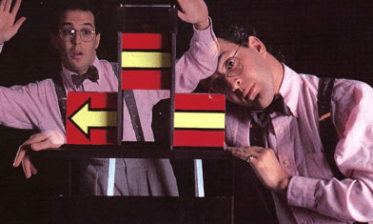
Ben Robinson is both a master magician and an historian of magic, author of Twelve Have Died: Bullet Catching, The Story & Secrets and of The MagiCIAn: John Mulholland’s Secret Life, as well as numerous articles for major magic publications. Just last month, Ben’s decades-long research into the use of magic in silent films came to fruition with publication of his latest book, Magic and the Silent Clowns — a subject that had received scant attention until Ben’s work. Concurrent with that, Ben helped curate a fascinating show at New York’s Museum of the Moving Image entitled Magicians on Screen, including both a magic performance by Ben and a lecture-demo on the subject of magic and the silent clowns. In fact, Ben had first proposed the idea to the museum back in the 80s. Patience is indeed a virtue — though persistence sure helps! This blogopedia is very pleased to be able to share the first chapter from Magic & the Silent Clowns, and to be able to match Ben’s enthusiastic prose with a few video clips.

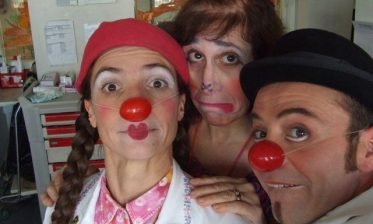
When I run into Hilary Chaplain, an old friend and fellow New Yorker, my usual greeting is “Oh, I didn’t know you were back in the country.” As a popular theatre clown with a one-woman show and as a teacher of clown and physical comedy, Hilary is in demand at festivals and variety theatres all over the world. It was on these travels that she became acquainted with Spy Monkey, and her enthusiasm about their work led not only to this guest post, but also to her bringing them to New York to conduct workshops. You can read more about Hilary here, and if you’re anywhere near New York next weekend (Dec. 8–11), catch her show, A Life in her Day, as part of the Voice 4 Vision Puppet Festival at the Theatre for the New City. —jt
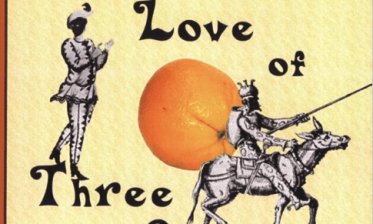
I’m always on the lookout for news about Carlo Gozzi for reasons that will soon become obvious. When I saw John’s post where he lamented the fact that there was no public domain English version of The Love of Three Oranges for him to post and share with you, I had to jump in. I have one of the more popular modern English versions of Three Oranges and, while it’s not public domain, my publisher actually has 90% of the play online for you to read at your leisure. It’s really only missing the last scene or so.
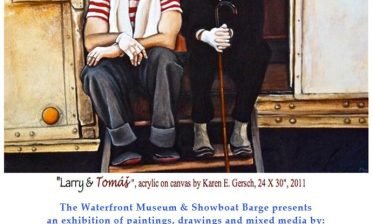
In a previous and popular post, this blog had the privilege of sharing Karen Gersch’s paintings and drawings of classic clowns. If you haven’t seen it, Do Not Pass Go and instead click here immediately!
David Carlyon is an old friend and quite the Renaissance man. A bio that includes fighting forest fires, serving as an MP in the Army, and selling beer at Philadelphia’s Vet stadium grabs your attention even before you get to the three years as a clown with Ringling Brothers and the Ph.D. from Northwestern University. David has been a professional clown, actor, director, and both a creative and scholarly writer, and is perhaps best known for his definitive biography of Dan Rice, the great 19th-century American clown: Dan Rice: The Most Famous Man You’ve Never Heard Of.
Hovey Burgess is a circus performer, educator, and historian no doubt known to many of you. American performers mining the circus/commedia tradition who do not hail from traditional circus families can usually trace some portion of their training directly or indirectly to Hovey’s classes, myself included. Author of the how-to guide, Circus Techniques, Hovey is also one of the top authorities on the history of the circus. He was an indispensable resource for me when I was writing Clowns back in the 70s, and has continued to be so today in the writing of this blog. It is therefore a great honor to have him share his erudition with my readers as an example of the kind of writing and research the art of circus truly deserves.
Back in November 2009, I wrote a blog post on Sweden’s Cirkus Cirkör when they appeared at the Brooklyn Academy of Music. I tried to limit myself to covering some physical comedy elements that I thought worth reporting, but I could not help but take issue with a negative review of the show that had appeared in The New York Times. Because I found their critic to be uninformed and therefore unqualified, I wrote the following: “It’s perfectly fine for someone not to have liked this show. I’m not at all opposed to the idea of serious circus criticism, but I think the “paper of record” might want to apply the same standards to all circuses, and find a writer with real expertise in the area. As my friend Dave Carlyon pointed out, if you’re going to write about opera, it’s not enough just to know about the performing arts, you actually have to know about music. Likewise… well, you get the point. Hmm… maybe the Times should hire Hovey as their circus reviewer.”
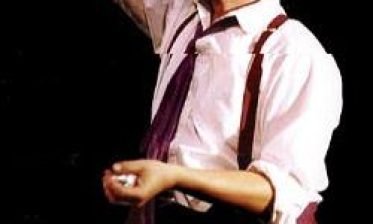
Jeff Raz’s performance credits range from Cirque du Soleil to Broadway, his teaching credentials from San Francisco’s Clown Conservatory and ACT to the Big Apple Circus and now all the way to China. His international experience is staggering, and he has already favored us with a guest blog post about Japanese Butoh. This time he has been so kind as to write about his travels as a pioneering clown teacher and director in China. For more, you can visit Jeff’s personal web site here. Thank you Jeff, and also to Calvin, Jonah, Christopher, and Linie for their contributions. —jt

It is a real privilege to be able to present the work of Karen Gersch on this blog. I’ve known Karen for over three decades (though we’re both 29), and she’s quite the Renaissance woman: clown, acrobat, painter, educator, producer — and for all of those three decades New York City’s hostess to ever so many variety artists visiting from around the globe. Karen & I even performed in the Hubert Castle Circus together with Fred Yockers in the late 70s, and I want to say in my defense that any stories she may tell about me from those days are nothing more than wine-induced fabrications. I thought the best way to introduce Karen to the blog was this series of her paintings and drawings of classic clowns. We’ll follow up in later posts with her look at more contemporary clowns, and some of her own performance writing. But first some links:
Karen’s current exhibition at the Blueberry Music & Art House in Greenwich, Connecticut
Karen’s art web site.
Karen’s Showboat Shazzam (formerly Circus Sundays) series at the fabuloso Waterfront Museum (this is last year’s schedule, but check back for this June’s events)
Karen’s Acrobrats performance web site.
TRANSLATE THIS PAGE
My first book (1976)
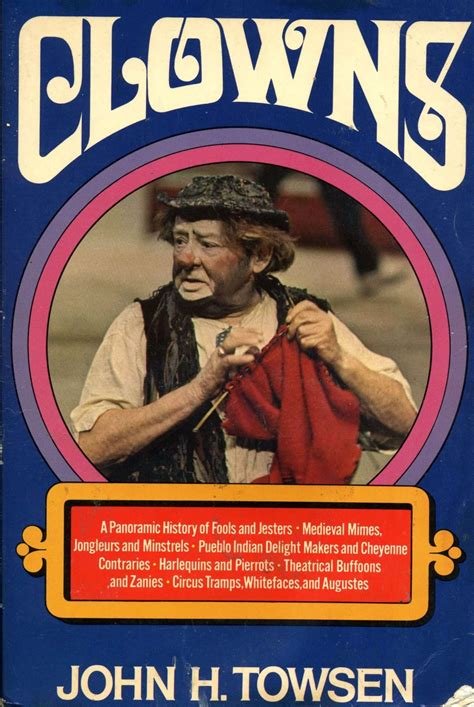
My book Clowns has long been out of print, but you can borrow it for two weeks at a time from the Internet Archive. More information is available here.
My second book (2015)

Visual and verbal humor for the cognitively and artistically curious! Available here.
“A book to treasure!”
—Bill Irwin