Tag: Masks

Long before there was Blue Man Group, nouveau cirque, and dozens of genre-bending mask / mime / movement troupes, there was Mummenschanz. To see their show back in the seventies was to be at the birth of entirely new theatrical possibilities. Founded in ’72 by Bernie Schürch and Andres Bossard (both Swiss, both Lecoq graduates), and the Italian-American Floriana Frassetto, Mummenschanz was a commercial hit, popular enough to merit a three-year Broadway run.
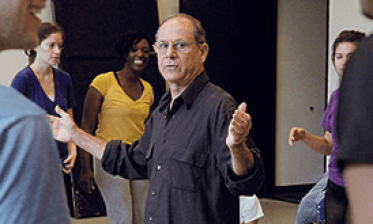
The notion that physical comedians and other movement artists might have something to teach traditional actors goes back at least a century, when such innovative directors as Jacques Copeau in France and Vsevolod Meyerhold in Russia hired accomplished clowns and variety performers as guest instructors. In the United States, this became a trend in the 60s and 70s as “experimental” theatres sought to break the confines of the fourth wall and Stanislavski method acting to forge more theatrical performance styles.
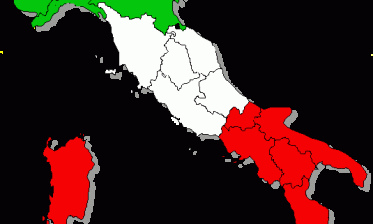
La commedia dell’arte è nata in Italia nel XVI secolo e rimasta popolare sino al XVIII secolo. Non si trattava di un genere di rappresentazione teatrale, bensì di una diversa modalità di produzione degli spettacoli. Le rappresentazioni non erano basate su testi scritti ma dei canovacci detti anche scenari, i primi tempi erano tenute all’aperto con una scenografia fatta di pochi oggetti. Le compagnie erano composte da dieci persone: otto uomini e due donne. All’estero era conosciuta come “Commedia italiana.”

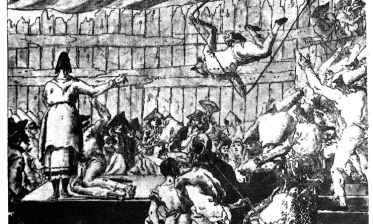
When I was writing Clowns, these were the books I consulted the most for my section on commedia dell’arte:
• Masks, Mimes & Miracles by Alardyce Nicoll
• The World of Harlequin by Alardyce Nicoll
• The Italian Comedy by Pierre Duchartre
• The History of the Harlequinade by Maurice Sand
• Scenarios of the Commedia Dell’Arte by Flaminio Scala
• The Commedia Dell’Arte by Giacomo Oreglia

Copenhagen’s NationalMuseet is sponsoring several excellent exhibitions relevant to the climate change summit, including Indians of the Rain Forest; Climate: Denmark from Glaciers to Global Warming; and especially Many Strong Voices, featuring projects and speakers from Arctic and Small Island Developing States who are already struggling with the results of global warning.

TRANSLATE THIS PAGE
Workshops & Other Events
My first book (1976)
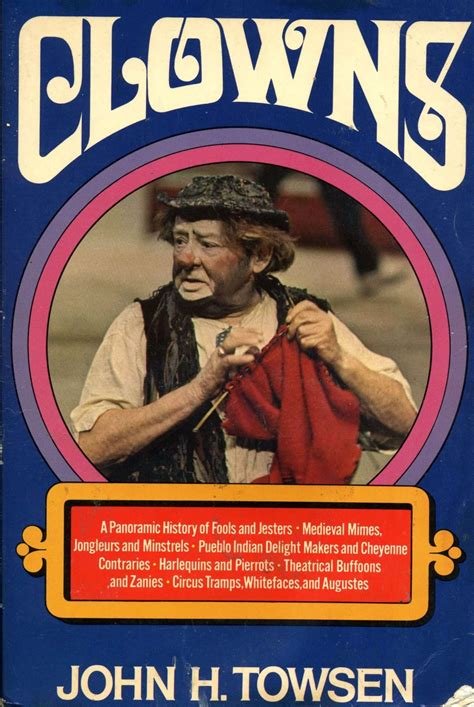
My book Clowns has long been out of print, but you can borrow it for two weeks at a time from the Internet Archive. More information is available here.
My second book (2015)

Visual and verbal humor for the cognitively and artistically curious! Available here.
“A book to treasure!”
—Bill Irwin