Tag: Silent Film Comedy
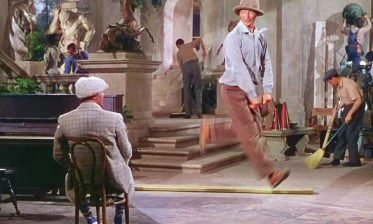
Way back in the day, 1980 to be precise, when I was working with Joe Killian and Michael Zerphy, whenever we saw other performers do a bit we really liked, we’d say “consider it stolen!” I think the phrase originated with Joe, but he may have stolen it.
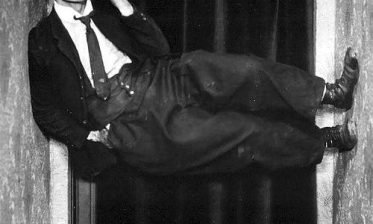
I’m always amazed to find young physical comedians who study and work hard at their craft and yet have only minimal familiarity with the silent films of Buster Keaton.

Yes, the blog is back! I’ve pretty much been away from it for a year as I worked on a new book (see sidebar), but I’ve got plenty of new stuff to share. Well, this post’s new stuff is actually quite old, but I’m sure new to most of you: a tutorial on pratfalls from silent film great Lupino Lane’s out-of-print book, How to Become a Comedian.
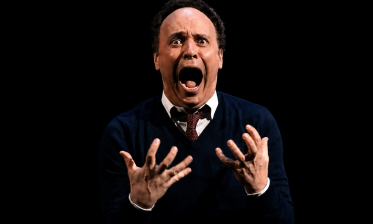
Don’t want to give away the joke, so just watch!
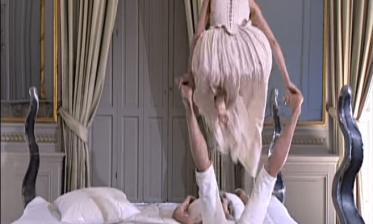
Last night I made it out to Triskelion Arts in Williamsburg for a totally fun double-bill of comedy dance with a Valentine’s Day theme, and it got me thinking how some of the best physical comedy is to be found in the world of dance. [The double-bill was the Red Gloves’ Flannery and the Valentine’s Day Ninja, created by Billy Schultz and Geneviève Leloup; and Tough Cookie Dance’s Love Letters, by Josselyn Levinson. If you happen to be reading this on Valentine’s Day in NYC, don’t miss the last performance tonight.]
Chain of Fools
Silent Comedy and Its Legacies
from Nickelodeons to YouTube
by Trav S.D.
Trav S.D. —oddly enough named after his gritty home town in the middle of South Dakota’s Badlands — is a so-good-he’s-bad vaudevillian: a performer, producer, historian, popularizer, and blogger whose popular blog Travalanche is a must for the variety arts fan.
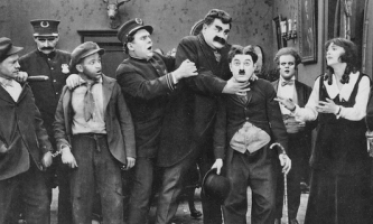
Just over 100 years ago ago, Mack Sennett hit cinema pay dirt and spawned American silent film comedy when he introduced audiences to the hapless Keystone Cops, forever the butt of the joke. Chaplin and Keaton and their fellow silent film comedians likewise mocked police incompetence and, more politically, condemned at least implicitly their treatment of the underdog. Nowadays such attitudes are rarer in film comedy, but certainly not in the work of French prankster and provocateur Rémi Gaillard, whose YouTube videos have had over a billion hits.
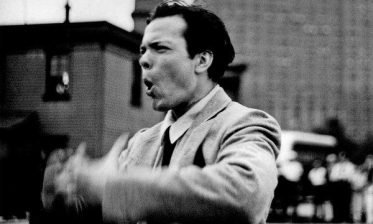
Huh? Orson Welles? The guy whose “first film” Citizen Kane made movie history in 1941?
One of Buster Keaton’s most famous (and dangerous) gags was standing obliviously in the path of a falling side of a house in Steamboat Bill, Jr. (1928).

I know, I know, yet another post on The Artist — but this article from London’s Guardian newspaper is actually about some new film and stage projects that now have a better chance of success thanks to all this new interest in silent movies.
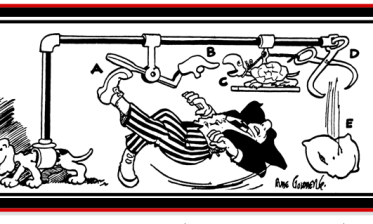
Rube Goldberg was an inventor and cartoonist born the same year as Max Linder (1883), which is to say a few years after Mack Sennett and a few years before Charlie Chaplin and Stan Laurel. He drew popular cartoons of elaborate gadgets that performed simple tasks in the most convoluted way imaginable.
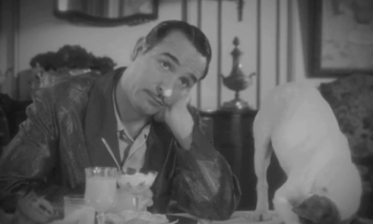
I first previewed the new silent movie, The Artist, when it surfaced at the Cannes Film Festival in May, and then reviewed it when it opened in New York on Thanksgiving weekend, but now folks who know about these things are saying it might actually snatch the best-picture Oscar. We’ll have to wait until January 24th for the nominations, but meanwhile The Artist has won best picture in Boston and San Francisco, copped six Golden Globe nominations, garnered four nominations from the Vancouver Film Critics Circle, and was named by the Producers Guild of America and the Houston Film Critics Society as one of the year’s top 10 movies. As we get closer to the February 26th Academy Awards, money, reputations, and artistic correctness will all be at stake, so of course the opinions are flying!
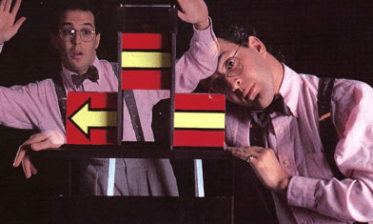
Ben Robinson is both a master magician and an historian of magic, author of Twelve Have Died: Bullet Catching, The Story & Secrets and of The MagiCIAn: John Mulholland’s Secret Life, as well as numerous articles for major magic publications. Just last month, Ben’s decades-long research into the use of magic in silent films came to fruition with publication of his latest book, Magic and the Silent Clowns — a subject that had received scant attention until Ben’s work. Concurrent with that, Ben helped curate a fascinating show at New York’s Museum of the Moving Image entitled Magicians on Screen, including both a magic performance by Ben and a lecture-demo on the subject of magic and the silent clowns. In fact, Ben had first proposed the idea to the museum back in the 80s. Patience is indeed a virtue — though persistence sure helps! This blogopedia is very pleased to be able to share the first chapter from Magic & the Silent Clowns, and to be able to match Ben’s enthusiastic prose with a few video clips.
TRANSLATE THIS PAGE
Workshops & Other Events
My first book (1976)
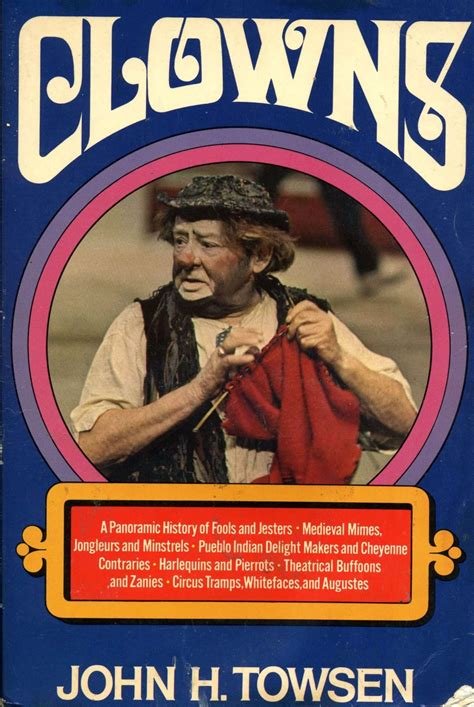
My book Clowns has long been out of print, but you can borrow it for two weeks at a time from the Internet Archive. More information is available here.
My second book (2015)

Visual and verbal humor for the cognitively and artistically curious! Available here.
“A book to treasure!”
—Bill Irwin