Tag: Italy

No, not Abbott & Costello, but Allora and Calzadilla. Yes, we are finally leaving the world of commedia, but not the world of Venice. Earlier this summer I reported on A & C’s work, this year’s unusual U.S. entry to the Venice Biennale arts festival, which runs through November 27th. In that early post, I didn’t have any video to show from Venice. Now I do, plus this dissenting review from the NY Times.
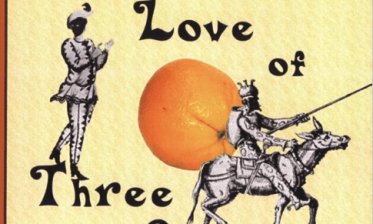
I’m always on the lookout for news about Carlo Gozzi for reasons that will soon become obvious. When I saw John’s post where he lamented the fact that there was no public domain English version of The Love of Three Oranges for him to post and share with you, I had to jump in. I have one of the more popular modern English versions of Three Oranges and, while it’s not public domain, my publisher actually has 90% of the play online for you to read at your leisure. It’s really only missing the last scene or so.
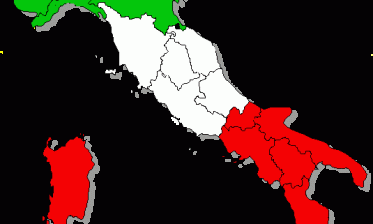
La commedia dell’arte è nata in Italia nel XVI secolo e rimasta popolare sino al XVIII secolo. Non si trattava di un genere di rappresentazione teatrale, bensì di una diversa modalità di produzione degli spettacoli. Le rappresentazioni non erano basate su testi scritti ma dei canovacci detti anche scenari, i primi tempi erano tenute all’aperto con una scenografia fatta di pochi oggetti. Le compagnie erano composte da dieci persone: otto uomini e due donne. All’estero era conosciuta come “Commedia italiana.”

We finally finish our saga of public domain books in English about the commedia dell’arte with these two offerings.
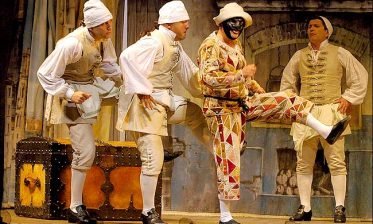
As is often the case, since writing my post on Carlo Goldoni last week — read that post first! — I have stumbled upon a bunch of new stuff that I would have included had I been as wise and knowledgeable then as I am now. The new (to me) material is on Giorgio’s Strehler’s famous production of Arlecchino, Servant of Two Masters. My first stumble was via an Adam Gertsacov post about Strehler on his clownlink.com blog, which led me along a virtual path to two NY Times articles and five more videos.
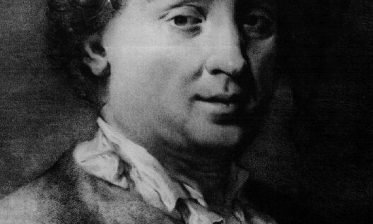
Carlo Goldoni (1707–1793) was the Molière of Italy, the comic playwright who drew upon the traditions of the commedia dell’arte while creating tightly scripted plays. The best known of these is A Servant of Two Masters, a popular choice of modern theatre companies wanting to do a commedia-style show without actually working in improvisational mode.

The Venice Biennale is a bi-annual world fair of art, complete with national pavilions, long lines, and manufactured hoopla. The U.S. pavilion went up in 1930 and has usually housed big-name artists, starting with Edward Hopper that initial year. But this time around, instead of sending an established solo artist, our government has chosen to have us represented by two less known collaborative artists who are centered not stateside but rather in Puerto Rico — Jennifer Allora and Guillermo Calzadilla. And for apparently the first time ever, the visual artists are also performance artists. I haven’t seen their work, but what interests me about them is their whimsical humor and physicality, in this case involving a troupe of former Olympic gymnasts in their piece.
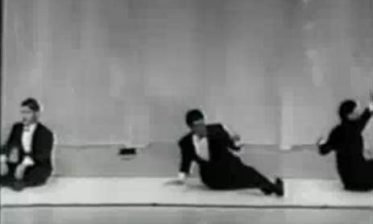
Here’s another strong comedy acrobatic act, which you already saw a short segment of if you read my post on Charlie Rivel. That’s the Three Rebertis doing the “little bridge.” Thanks to Nicanor Cancellieri for sending me this one, which comes originally from Raffaele De Ritis, who I finally got to meet in Barcelona, and whose blogs, Novelties & Wonders and Storia del Circo, are well worth your time. Raffaele is also one of the brains behind the Circopedia web site, the internet’s best English-language resource for circus history.
TRANSLATE THIS PAGE
Workshops & Other Events
My first book (1976)
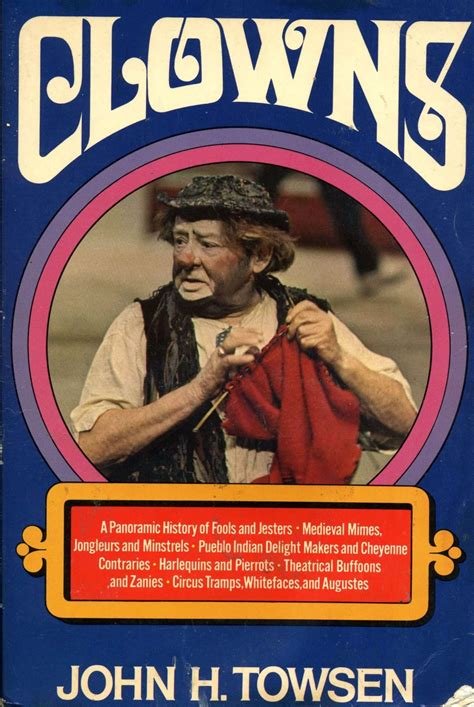
My book Clowns has long been out of print, but you can borrow it for two weeks at a time from the Internet Archive. More information is available here.
My second book (2015)

Visual and verbal humor for the cognitively and artistically curious! Available here.
“A book to treasure!”
—Bill Irwin