List of Posts

As some of you may have heard me wail, my six weeks in Europe this past spring ended on a dismal note, as my backpack was stolen in the Cherbourg train station, and with it my laptop containing a lot of recent (brilliant!) writing. And because I am —when all is said and done— a Total Idiot, most of it was not backed up.
I started this blog in May, 2009 and nine years and 441 posts later I decided to take a little break. Not out of boredom or any feeling that enough was enough, but simply because I had too many other projects and I seemed incapable of writing quick posts. Every idea, no matter how simple it initially appeared, inevitably took me down some fascinating rabbit hole of research, where other examples and insights kept popping up. Which is great for a blogopedia, except posts that I fantasized would be knocked off in an hour or so ended up taking up the better part of a day or two. So I took a short break —for eight years!

I will state categorically that Jerry Lewis (1926–2017) was a top-notch physical comedian, skilled and often very funny, and I’ve already written about him in four previous posts (see below). Comedy is to some degree a matter of taste, and Lewis sure had his supporters and detractors. He was a megastar, who by 1959 had signed the highest-paying Hollywood contract ever, and one with unprecedented artistic control. But as the years passed he was dismissed by many as being corny, abrasive, over-the-top and, well, tasteless. Not funny!
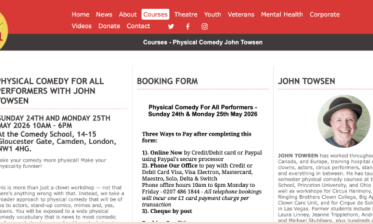
“When a man is tired of London, he is tired of life; for there is in London all that life can afford.”
—Samuel Johnson, 1777
I’m betting this has happened to you: You find an affordable place to rehearse, perhaps in a neighborhood that you can also afford to live in. Other artists who work large gravitate there. Pretty soon it becomes a pretty interesting neighborhood. More restaurants open up, maybe a couple of art galleries, and before you know it, it’s trendy. Everyone wants to live there… and many of them have a lot more money than you do. This of course is not lost on the real estate industry. Rents rise, not just a little, but by tenfold, and before you know it, you and your fellow artists can’t afford to live or rent space there so you move to the next neighborhood you can afford, a bit farther off the beaten track, a bit farther from public transportation, a bit seedier, maybe a bit less safe at night. And the process repeats… from Soho to Tribeca to Williamsburg to Bushwick to Ridgewood to small towns along the Hudson River…. change the names for your city, and there you are.

It would have been way too predictable for me to try to fool you on April Fool’s Day, but this BBC video from 1957 was actually just such a joke, likely the first April Fool’s prank by a major broadcaster. I remember seeing it on the tv show, Tonight Starring Jack Parr, and since I still remember it, obviously it made an impression, either because I thought it very funny or perhaps because I actually fell for it at the time. I was eight, after all. I was reminded of it again when my old clown partner Fred Yockers sent me a clip of it. This is the original BBC version:

Caroline Simonds sent me the video below, describing it not only as “the best moment in Switzerland” but also “the highlight of the conference.” Caroline is an old friend (but younger than me) who moved to France in 1991 and brought hospital clowning with her, establishing Le Rire Médecin, which through her leadership became a large and highly respected organization for French hospital clowning. Her 2024 book, Le Rire Médecin: Journal du Docteur Girafe, was the inspiration for the wonderful French film, Sur un Fil (On the Edge).

An article about Trump’s attack on Iran from the Financial Page in the highbrow New Yorker —Trump’s Inexcusable Unpreparedness for the Iranian Oil Crisis— was the last place I expected to find a discussion of Laurel & Hardy. But I think the writer, John Cassidy, nailed this one:
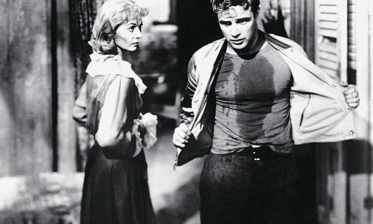
I recently came across two more Sid Caesar pieces that I liked so much that I had to share them here. And that’s even though I’ve already written about Caesar several times over the years:

I never met or studied with Philippe Gaulier (1943–2026), who passed away on February 1st at the age of 82, but many of my friends did. While some found his confrontational, via negativa teaching style not to their liking, most found his pedagogy valuable and indeed many returned to his school in Étampes for multiple sessions. Either way, it is hard to exaggerate the enormous influence he had on contemporary performance, including but not limited to the clown world. Especially noteworthy is the long list of successful performers who credit him for major breakthroughs in their artistic development, including Sacha Baron Cohen (Borat); Théâtre de Complicité; Roberto Benigni (Like is Beautiful); Aitor Basauri (Spymonkey); Dr. Brown (Phil Burgers); and Geoffrey Rush (Shakespeare in Love).
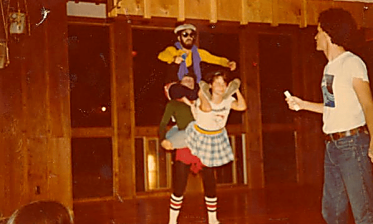
I hope you enjoyed this blog’s previous post, a history of the Valley Studio by Jef Lambdin. I just want to add a short anecdote that I think is kind of funny but also carries a message. Okay, maybe not a profound message, but I’ll let you be the judge of that…

At a time like this, when neo-fascist wannabe dictators are setting people against one another for their own political gain and financial enrichment, I think it more important than ever to celebrate and help perpetuate sharing communities. One such community was the Valley Studio, a movement theater school that flourished in Spring Green, Wisconsin throughout the 1970s. The Valley Studio had, without exaggeration, a tremendous influence on my life. Starting with my first visit in 1975, it introduced me to a new circle of creative friends, many of whom have been part of my life for the past (yikes!) half-century. Many others would say the same thing. Thank you to Jef Lambdin for all his work chronicling this history and for allowing me to share it with a new audience. This article first appeared in the Association of Movement Theater Educators Newsletter (Spring 2012, Volume 20, Number 1).

I’ve already shared Super Bowl commercials using physical comedy in this post from 2010 and eight years later in this post. Now, another eight years later, I return to this topic one more time to prove my point that Physical Comedy is Everywhere, only most people don’t recognize it as such. In Exhibit A of this 26-part series, we looked at Stephen Colbert’s use of mime, dance, and visual humor as part of his late-night comedy. Now we turn to the USA’s largest commercial extravaganza, the Super Bowl, the championship of American football, watched by some 125 million people in North America and 200 million worldwide. Unlike the fútbol / futebol / fußball that we Americans call soccer, American football has lots of timeouts and therefore room for a lot of commercials. The cost for a 30-second nationwide spot is around $8–10 million, and double that for a full minute. For the more lavish commercials, the production costs are almost as high. Still, the Super Bowl is the place to be to reach eyeballs, whether you’re Toyota or an AI giant or a start-up trying to make a splash. The commercials feature high production values and big-name celebrities in a desperate attempt to stand out. Watching them is very much like watching another competition. Some people even say they don’t watch the game, they just watch the commercials. Just google “superbowl commercials” and you’ll find countless analytic reviews and top-ten lists.
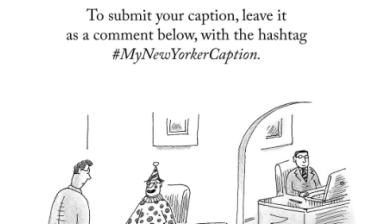
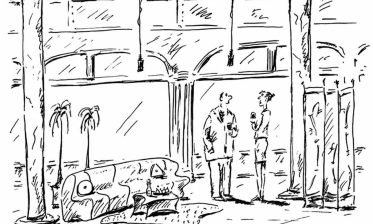
Despite its enduring popularity, not everyone reads The New Yorker, so some quick background: Founded a century ago primarily as a humor magazine, The New Yorker is known for its fiction writing, in-depth journalism and, yes, still for its humor, in the form of essays and cartoons. The cartoon caption contest is a relatively new feature: a cartoon illustration is presented and readers submit what they think is the funniest caption. Magazine editors select three finalists and readers vote to choose a winner. I’ve entered a few times and, inexplicably, never won. Well, they do average over 5,000 contestants per cartoon, so….
TRANSLATE THIS PAGE
My first book (1976)
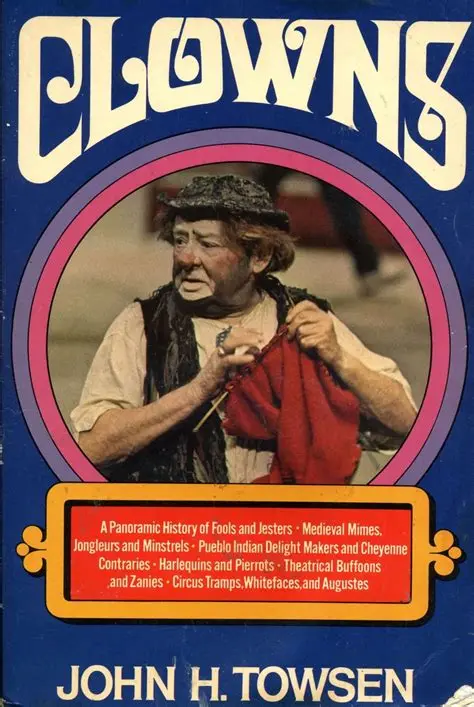
My book Clowns has long been out of print, but you can borrow it for two weeks at a time from the Internet Archive. More information is available here.
My second book (2015)

Visual and verbal humor for the cognitively and artistically curious! Available here.
“A book to treasure!”
—Bill Irwin