List of Posts

I recently had an important experience in Minneapolis, which was working on a play called Nobody No Time, written by Carlyle Brown, a good friend from way back. The play is about Bert Williams and the title is in reference to the song Nobody, which he made popular and co-wrote with Alex Rogers. Since Carlyle knows of my background in mime and African-American performance history, he brought me out to Minneapolis to be the choreographer and dramaturge for the play, which he also directed. But who was Bert Williams, and why was this an important experience for me?
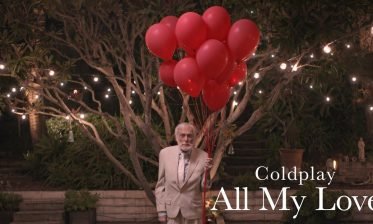
I’ve already written a lot about Dick Van Dyke and don’t want to repeat myself too much here, but as an intro to his work for those of you new to it, here’s a classic piece from his long-running tv comedy series, The Dick Van Dyke Show.
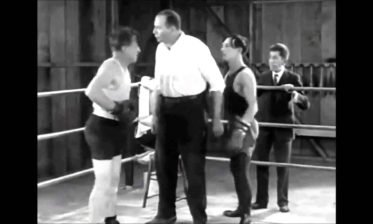
Make that 76 for Chaplin if you include City Lights and Modern Times.
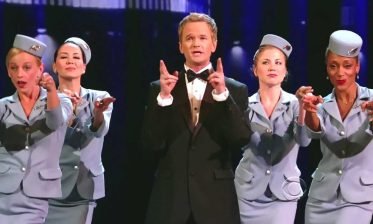
Here’s a short, fun piece that combines song, dance, group movement, witty lyrics, audience participation, and social commentary. Featuring Neil Patrick Harris, it’s from the 2011 Tony Awards celebrating Broadway Theatre. As I said when introducing the Gene Nelson post, musical comedy as a genre is usually too corny for my tastes, but I can still enjoy its many displays of robust physical comedy. I’ll be dipping into this well more in future posts, but meanwhile take it away, Mr. Harris!
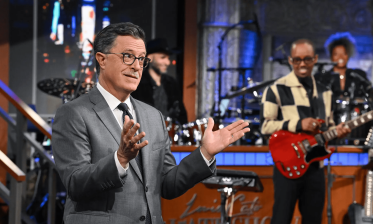
As a physical comedy aficionado, the question I get asked the most is: “What is physical comedy exactly?” Usually I stammer and say something like, “well, you know, comedy that’s, uh, physical.”
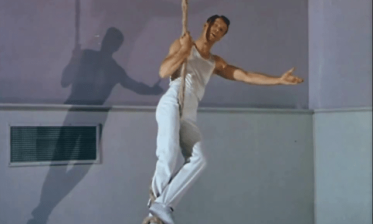
Most Hollywood musical comedies are too schmaltzy for my tastes, so until recently I didn’t even know who Gene Nelson was. But many of these movie musical comedy performers from the 40s and 50s were wonderfully skilled and talented, and a great example is Gene Nelson, a highly athletic dancer and, later on, a highly successful TV and film director. Nelson was an engaging and charismatic performer, but what I especially like when I think of him in terms of physical comedy is the way he incorporated our physical world into so much of his choreography—furniture, props, pianos, walls, stairs —pretty much everything that surrounds him, whether nailed down or not. It was all an excuse for improbable dancing, leaping, bouncing, and swinging.

First a little history:

Rowan Atkinson (aka Mr. Bean) is a very funny man and a talented physical comedian. This clip from Mr. Bean’s Holiday (2007) has a lot to offer. His various comic bits would be funny enough even out of context, and you can find shorter clips of this on YouTube with just the singing and dancing, but notice how much the story setup deepens the comedy. And how much funnier the opera singing gets once he and the boy start acting out a story to it.
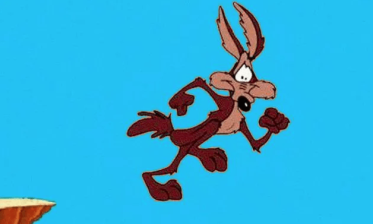
Writing this post, I just learned that a “Wile E. Coyote moment” is a serious term used by serious economists. Here’s no less an authority than Nobel Prize-winning economist Paul Krugman using it this week as a metaphor for the voodoo economics spouted by the Trump administration:

Where the hell have you been?
Sid Caesar (1922–2014), who I worked with VERY briefly (full story here), was one of the truly great American comedians. He was also the King of Gibberish, fluent in faking many a foreign language. I hadn’t seen Gallipacci until Riley Kellogg recently ran across it and clued me in, but it’s already one of my favorite Caesar pieces. And what an ensemble! That’s Nanette Fabray as Pagliacci’s wife, who in fact had opera training at Juilliard (despite a serious childhood hearing problem). Carl Reiner, partner to Mel Brooks and father to Rob, is the rival. And Howard Morris is the elfish Vesuvio. The score is —shall we say?— eclectic.
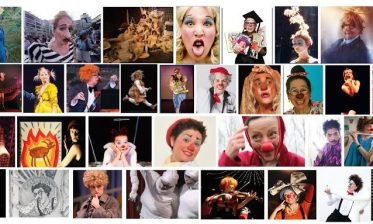
Reminder: just click on the images to enlarge, including this one!
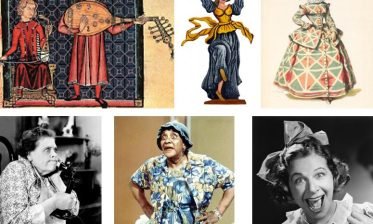
In my last post we saw that pre-1975 circus clowning was pretty much a boys club, with a big No Girlz Allowed sign posted on the clown alley door. When we look outside the circus, we see more gender fluidity when it comes to women clowning, though still nothing like what started to develop after 1975.
TRANSLATE THIS PAGE
My first book (1976)
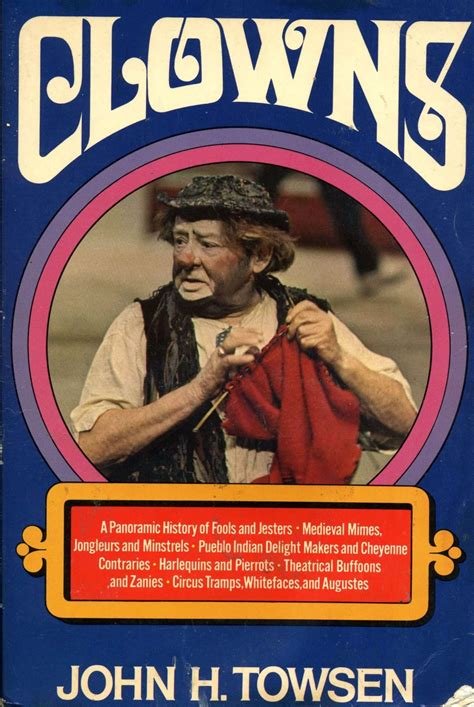
My book Clowns has long been out of print, but you can borrow it for two weeks at a time from the Internet Archive. More information is available here.
My second book (2015)

Visual and verbal humor for the cognitively and artistically curious! Available here.
“A book to treasure!”
—Bill Irwin