Tag: Charlie Chaplin
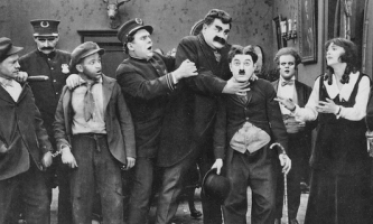
Chain of Fools
Silent Comedy and Its Legacies
from Nickelodeons to YouTube
by Trav S.D.
Trav S.D. —oddly enough named after his gritty home town in the middle of South Dakota’s Badlands — is a so-good-he’s-bad vaudevillian: a performer, producer, historian, popularizer, and blogger whose popular blog Travalanche is a must for the variety arts fan.
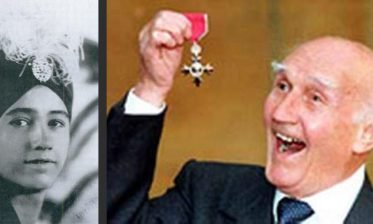
Johnny Hutch, one of the unsung heroes of physical comedy, would have been 100 years old today. As things turned out, he not only made it past his 93rd birthday, but remained active as an acrobatic performer until age 69, and as a teacher and choreographer late into life, last working as a stunt coordinator for the Royal Shakespeare Company at the age of 87. He was also married to the same woman, Jane Phillips, for 66 years, passing away — probably not coincidentally — months after she did in 2006.
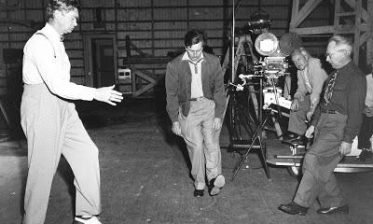
I am excited to be continuing with our series of guest posts by eccentric dancer Betsy Baytos, whose Kickstarter campaign to complete a fabulous documentary film, Funny Feet: the Art of Eccentric I hope you will join me in supporting.
As you can see from the article below, Betsy truly knows her stuff. In fact, I doubt there’s anyone else out there who comes close to matching her personal work experience in eccentric dance and in animation, combined with years of thorough historical research and tireless dedication to the project. In this installment, you will read how the comic moves of eccentric dancers were directly translated into famous animation characters. Amazing stuff! —jt
Charlie Chaplin died on Christmas Day 1977 and — I’m not making this up — a little more than two months later his body was stolen from his grave and held for ransom. Surprise surprise, this tactic failed. After two months the body was recovered and the grave robbers caught.

A standard formula for silent film comedy was for our shy and inept hero to pursue the girl of his dreams against all odds and somehow emerge triumphant in the end. Lloyd and Keaton stayed true to this narrative in most of their films, whereas Chaplin, with his penchant for pathos, would sometimes wistfully let the girl get away.
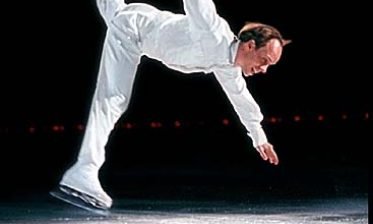
In his heyday almost 100 years ago, Charlie Chaplin was such a celebrity that his “little tramp” character was openly stolen by other comedians. According to David Trotter of the British Film Institute, “his rapidly escalating popularity encouraged a wide variety of imitators, from Stan Laurel, whose Chaplin imitation was overt, and thus flattering, to Billy West, a smalltime vaudevillian who copied Chaplin’s costume and make-up in more than fifty 1- and 2-reel comedies. In 1916, Charles Amador, a Mexican actor, changed his name to Charlie Aplin, and copied Chaplin’s most successful routines. Chaplin sued, and won, though not without difficulty.”
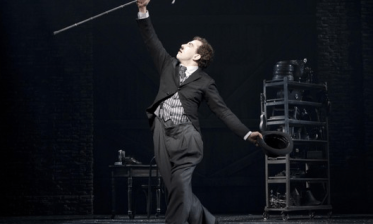
In my last post, I praised Rob McClure in the title role of Chaplin: The Musical but worried about the rest of the show — books, music, choreography, all those incidentals — being strong enough to justify Broadway prices. I was expecting lukewarm reviews but obviously I was way too optimistic. When I saw the word “soppy” in the second sentence of the NY Times review, I knew the show was in trouble.
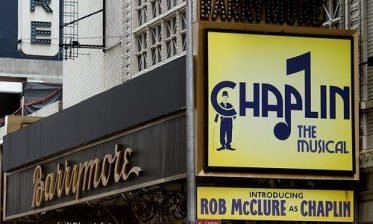
Thursday night I caught a preview performance of Chaplin: The Musical, a new Broadway show starring newcomer Rob McClure that was first developed at the La Jolla Playhouse under the title Limelight: The Story of Charlie Chaplin. That first draft did not get particularly good reviews, but that was a couple of years ago.
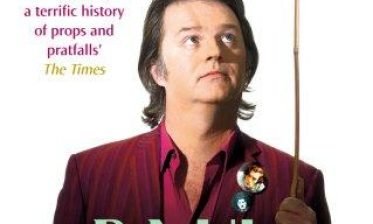
There are a ton of books about silent film comedy, many of them excellent, but they’re not written by performers. Paul Merton, author of Silent Comedy, is on the other hand a popular British comedian — mostly improv and stand-up, rarely silent —with a love for the heyday of slapstick. He has even done several lecture tours on the subject, bringing screenings with live music to theatre festivals and other venues throughout the U.K. In the past two years he has produced two documentaries on early film (not just comedy) for television: Paul Merton’s Weird and Wonderful World of Early Cinema (BBC Bristol, 2010) and The Birth of Hollywood (BBC2, 2011). He has also done an interactive presentation on early British film comedy for the British Film Institute, which you can view online here.
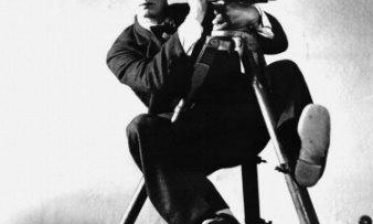
Everyone makes movies these days so why not clowns? Recent efforts I’ve come across range from filmed clown gags to full-blown attempts to recreate silent film comedies. You saw several of these in this recent post; at least you did if you know what’s good for you! Those were all pieces presented this fall at the NY Clown-Theatre Festival. Here are some more that have come to my attention over the past couple of years, though I wouldn’t be surprised if this is just the tip of the proverbial iceberg.
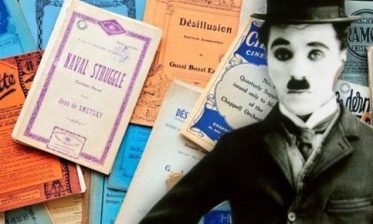
From the BBC wire, 12 August 2011. Richard Westcott reports:
Staff at Birmingham’s Central Library have discovered a priceless collection of more than 500 silent movie music scores. They made the find during a clearout before a move to a new building and unearthed more than just a bit of old junk.
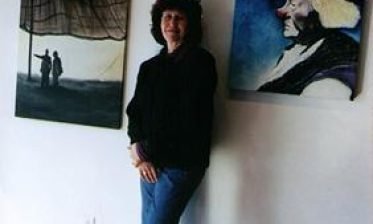
It is a real privilege to be able to present the work of Karen Gersch on this blog. I’ve known Karen for over three decades (though we’re both 29), and she’s quite the Renaissance woman: clown, acrobat, painter, educator, producer — and for all of those three decades New York City’s hostess to ever so many variety artists visiting from around the globe. Karen & I even performed in the Hubert Castle Circus together with Fred Yockers in the late 70s, and I want to say in my defense that any stories she may tell about me from those days are nothing more than wine-induced fabrications. I thought the best way to introduce Karen to the blog was this series of her paintings and drawings of classic clowns. We’ll follow up in later posts with her look at more contemporary clowns, and some of her own performance writing. But first some links:
Karen’s current exhibition at the Blueberry Music & Art House in Greenwich, Connecticut
Karen’s art web site.
Karen’s Showboat Shazzam (formerly Circus Sundays) series at the fabuloso Waterfront Museum (this is last year’s schedule, but check back for this June’s events)
Karen’s Acrobrats performance web site.
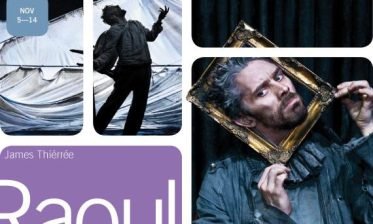
As the lights went down at the end of the final performance of James Thiérrée’s Raoul at the Brooklyn Academy of Music this afternoon, the entire audience immediately jumped to its feet to give him a rousing standing ovation. And yet the New York Times review argued that “the charms of Raoul the show quickly wear thin.”
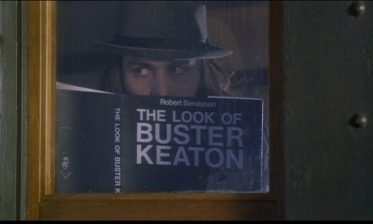
As you’ve probably noticed, the special features that come with DVDs these days are not necessarily all that special. Even when they get into performance issues, editing technique, or visual effects, the information is usually pretty basic. There are, however, some juicy enough tidbits out there for the nibbling, which I was reminded of when I recently chanced to give Benny & Joon (1993) a second look.
TRANSLATE THIS PAGE
Workshops & Other Events
My first book (1976)
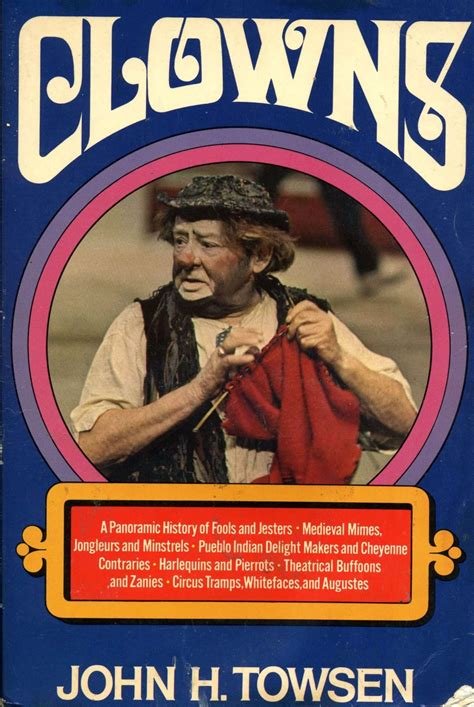
My book Clowns has long been out of print, but you can borrow it for two weeks at a time from the Internet Archive. More information is available here.
My second book (2015)

Visual and verbal humor for the cognitively and artistically curious! Available here.
“A book to treasure!”
—Bill Irwin