Tag: Complete Book

Here’s a riddle for you: what do the sticky floors of New York City subway cars and dusty, musty books on Elizabethan drama have in common? For the answer, just read on….

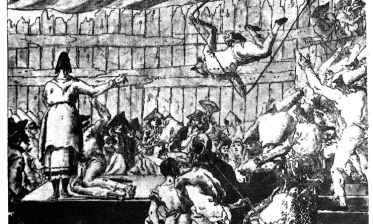
When I was writing Clowns, these were the books I consulted the most for my section on commedia dell’arte:
• Masks, Mimes & Miracles by Alardyce Nicoll
• The World of Harlequin by Alardyce Nicoll
• The Italian Comedy by Pierre Duchartre
• The History of the Harlequinade by Maurice Sand
• Scenarios of the Commedia Dell’Arte by Flaminio Scala
• The Commedia Dell’Arte by Giacomo Oreglia
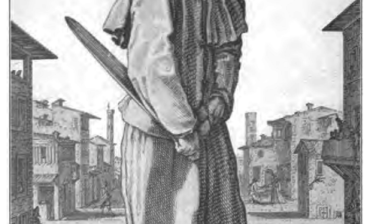
Because the essence of commedia dell arte was improvisation, recreating it for the modern reader has always been a tough task for scholars, and because it never pretended to be great dramatic literature, it didn’t get much interest from theatre historians or practitioners until the early 20th century. This started to change with directors like Copeau and Meyerhold, who took commedia as inspiration for a new approach to actor training, and modern art movements such as dada, futurism, and surrealism, that were less interested in literature than in the spontaneous theatrical event. Winifred Smith, one of the first commedia scholars from this period, was also a translator of futurist plays, and apparently quite a pioneer in her day. Here’s her bio from the web site of her alma mater, Vassar College, a prestigious women’s college that didn’t go co-educational until 1969:
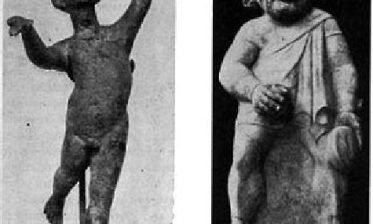
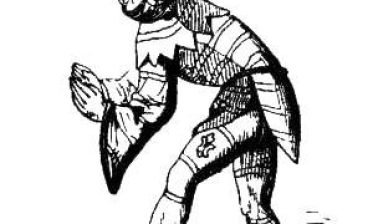
Histories of ancient theatre tend to leave the impression that comedy began with Aristophanes, but Greece already had a rich tradition of commedia-style performance — the Dorian mimes (image, above). As I wrote in chapter two of Clowns…
These Dorian clowns— as well as the short plays they performed —came to be known as
mimes (mimos). Today mime is usually equated with pantomime, the art of silent acting, but originally the word meant “to imitate” and referred to the performer’s talent for caricature; the ancient mimes were in fact quite talkative. Much of the dialogue apparently was improvised, and since the actors saw little need to preserve in writing what was said on stage, these comic dramas never became dramatic literature.

I’m about to overwhelm you with a slew of free, complete books related to the history of clowns in the theatre — and, yes, I expect you to read every single word of every single book —but for now I’ll be happy if you just read the next paragraph:
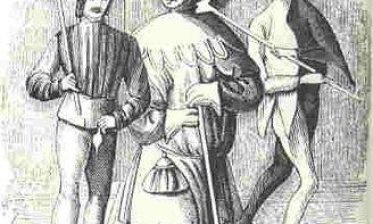
Fous et Bouffons: un Etude Physiologique, Psychologique et Historique (Fools & Buffoons: A Physiological, Psychological, and Historical Study)
by Dr. Paul Moreau
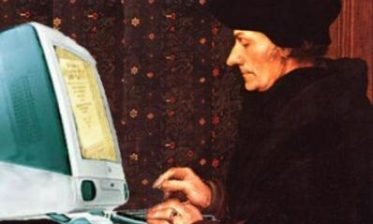
It turns out Erasmus is not just the name of a high school in New York City. Apparently before he was a high school — about 500 years before — he was also a famous philosopher.
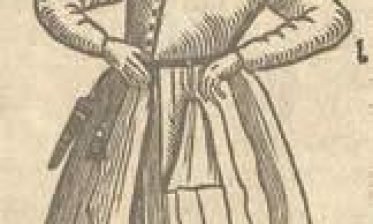
The standard entry on fools and jesters usually makes mention of Shakespeare’s jester characters, especially the fool in King Lear. It was Robert Armin (c. 1563 – 1615) who first acted the role as a member of the Lord Chamberlain’s Men, as well as such similar roles as Touchstone in As You Like It, Feste in Twelfth Night, Lavatch in All’s Well That Ends Well, and perhaps Autolycus in The Winter’s Tale, as well as comic parts in other Elizabethan dramas. In fact, Armin’s joining the company around 1600 is credited by some with Shakespeare’s increased interest in witty jesters.

The Delight Makers by Adolf F. Bandelier (1890)
A novel about Pueblo Indian koshare clowns
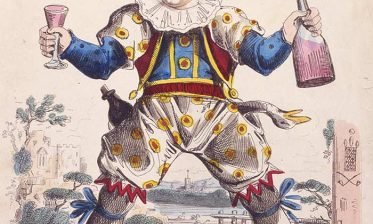
Today I introduce yet another new feature to this blog, a complete book in the form of a pdf file suitable for reading online, downloading, or printing. Because of legal issues, most if not all books presented here will be from the pre-copyright era, roughly a century or more ago, and therefore of a historical nature.
TRANSLATE THIS PAGE
Workshops & Other Events
My first book (1976)
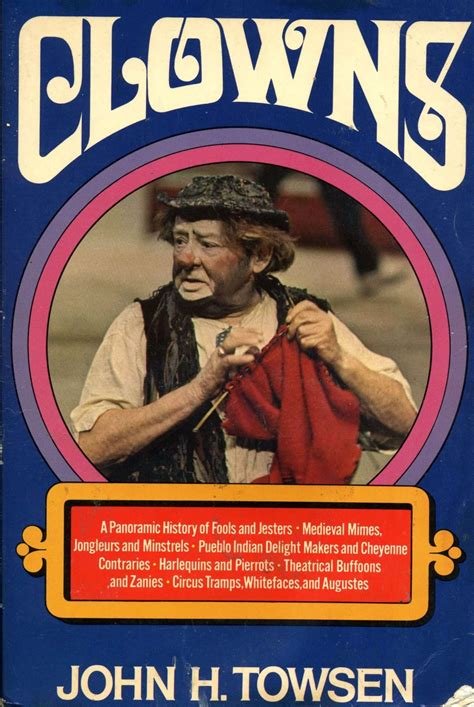
My book Clowns has long been out of print, but you can borrow it for two weeks at a time from the Internet Archive. More information is available here.
My second book (2015)

Visual and verbal humor for the cognitively and artistically curious! Available here.
“A book to treasure!”
—Bill Irwin