List of Posts
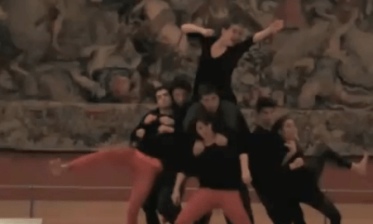
During my March visit to Paris, the Louvre was hosting various groups doing performances and other events around the art work each Friday night. The evening I visited, there were about half a dozen groups of students from the École Jacques Lecoq doing movement pieces in the Richelieu wing in front of glorious Renaissance tapestries and related art work. I thought the evening a great success, bringing new life to a museum that, though indisputably great, can still benefit from more dynamic ways of engaging art.

David Carlyon is an old friend and quite the Renaissance man. A bio that includes fighting forest fires, serving as an MP in the Army, and selling beer at Philadelphia’s Vet stadium grabs your attention even before you get to the three years as a clown with Ringling Brothers and the Ph.D. from Northwestern University. David has been a professional clown, actor, director, and both a creative and scholarly writer, and is perhaps best known for his definitive biography of Dan Rice, the great 19th-century American clown: Dan Rice: The Most Famous Man You’ve Never Heard Of.
Hovey Burgess is a circus performer, educator, and historian no doubt known to many of you. American performers mining the circus/commedia tradition who do not hail from traditional circus families can usually trace some portion of their training directly or indirectly to Hovey’s classes, myself included. Author of the how-to guide, Circus Techniques, Hovey is also one of the top authorities on the history of the circus. He was an indispensable resource for me when I was writing Clowns back in the 70s, and has continued to be so today in the writing of this blog. It is therefore a great honor to have him share his erudition with my readers as an example of the kind of writing and research the art of circus truly deserves.
Back in November 2009, I wrote a blog post on Sweden’s Cirkus Cirkör when they appeared at the Brooklyn Academy of Music. I tried to limit myself to covering some physical comedy elements that I thought worth reporting, but I could not help but take issue with a negative review of the show that had appeared in The New York Times. Because I found their critic to be uninformed and therefore unqualified, I wrote the following: “It’s perfectly fine for someone not to have liked this show. I’m not at all opposed to the idea of serious circus criticism, but I think the “paper of record” might want to apply the same standards to all circuses, and find a writer with real expertise in the area. As my friend Dave Carlyon pointed out, if you’re going to write about opera, it’s not enough just to know about the performing arts, you actually have to know about music. Likewise… well, you get the point. Hmm… maybe the Times should hire Hovey as their circus reviewer.”

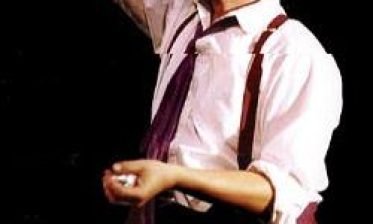
Jeff Raz’s performance credits range from Cirque du Soleil to Broadway, his teaching credentials from San Francisco’s Clown Conservatory and ACT to the Big Apple Circus and now all the way to China. His international experience is staggering, and he has already favored us with a guest blog post about Japanese Butoh. This time he has been so kind as to write about his travels as a pioneering clown teacher and director in China. For more, you can visit Jeff’s personal web site here. Thank you Jeff, and also to Calvin, Jonah, Christopher, and Linie for their contributions. —jt
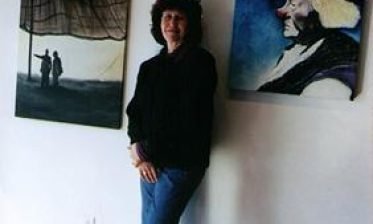
It is a real privilege to be able to present the work of Karen Gersch on this blog. I’ve known Karen for over three decades (though we’re both 29), and she’s quite the Renaissance woman: clown, acrobat, painter, educator, producer — and for all of those three decades New York City’s hostess to ever so many variety artists visiting from around the globe. Karen & I even performed in the Hubert Castle Circus together with Fred Yockers in the late 70s, and I want to say in my defense that any stories she may tell about me from those days are nothing more than wine-induced fabrications. I thought the best way to introduce Karen to the blog was this series of her paintings and drawings of classic clowns. We’ll follow up in later posts with her look at more contemporary clowns, and some of her own performance writing. But first some links:
Karen’s current exhibition at the Blueberry Music & Art House in Greenwich, Connecticut
Karen’s art web site.
Karen’s Showboat Shazzam (formerly Circus Sundays) series at the fabuloso Waterfront Museum (this is last year’s schedule, but check back for this June’s events)
Karen’s Acrobrats performance web site.
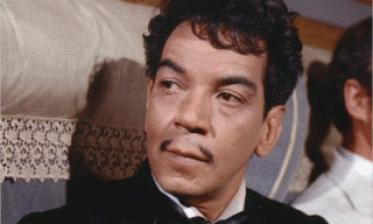
Jonathan Lyons is a top-notch 3D animator, with major credits working for, amongst others, ILM and Imagemovers Digital. Yes, you’ve seen his work, and you can see his demo reels here. Most recently he worked on Pirates of the Caribbean 4 — On Stranger Tides and, better yet, just finished his own short film, Floyd the Android, already entered into several film festivals. Jonathan is an aficionado of physical comedy who has graciously shared his insights and enthusiasms with this blog’s readers on several occasions. And to top it off, he has recently launched his own blog, Comedy for Animators, which I can’t recommend highly enough. Great stuff, with very specific and valuable analysis of the movement details essential to understanding physical comedy. Definitely check it out! — jt
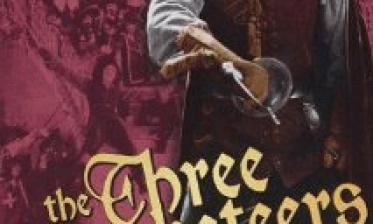
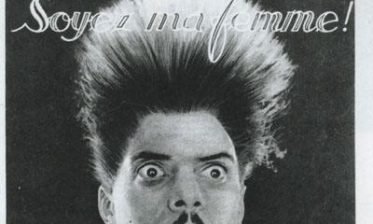
Max Linder produced, wrote, and directed three feature films for his own company: Seven Years Bad Luck (released Feb. 1921), Be My Wife (Dec. 1921), and The Three Must-Get-Theres (Aug. 1922). I’ve already written about Seven Years Bad Luck, and I guess I really do have some readers because I learned shortly thereafter that there was a short wait to rent it on Netflix. The pen is indeed mightier than the sword.
Keaton got Donald O’Connor, Chaplin got Robert Downey, Jr., and if screenwriter Samantha Husik has her way, Max Linder would be brought to life by the mega-talented Depp. Husik, a graduate of NYU’s Tisch School of the Arts film program, is the author of a new screenplay about Linder’s life and career that she is currently shopping around. I put Linder and Depp into my handy-dandy Morphomatic™ and this is what I got:
OK, this one’s no more than a curiosity, but since we’re still on the subject of Linder….
If I’ve convinced you in my recent posts that Max Linder is worth knowing about, then you might want to read more, no? But when it comes to books (you remember books) there’s still nothing in English devoted entirely to Linder, and the two books in French are both by his daughter, Maud Linder. Luckily, they’re excellent and it would be great to see them translated into English.
The rediscovery and remastering of silent film classics, reintroducing these artists to the public by way of annotated DVD box sets, has been a great gift to the physical comedy fan. First it was Chaplin and Keaton, then Lloyd and Langdon, followed by Charley Chase, Douglas Fairbanks and, most recently, that modern silent clown, Pierre Etaix. And now finally the father of silent film comedy, Max Linder, is being justly celebrated for his pioneering career that spanned over 400 films, about 130 of which have survived, in a handsome 6-disc DVD set complete with historical commentaries and new musical scores by New York’s own Ben Model.
We may know Max Linder as the first truly international film star, the father of silent film comedy, but he was also a playwright and stage comedian whose live performances drew mobs every bit as frenzied as those that later greeted Chaplin, Sinatra, and the Beatles. What is most compelling about his stage work, however, is his innovative combination of film and live performance, the details of which you’ll have to read Mr. Bren’s article to discover! And click here to visit Mr. Bren’s web site.
Supposedly I’m a big expert on all this clown and physical comedy stuff. Yeah, like I actually have the time to watch all those DVDs overcrowding my shelves.
TRANSLATE THIS PAGE
My first book (1976)
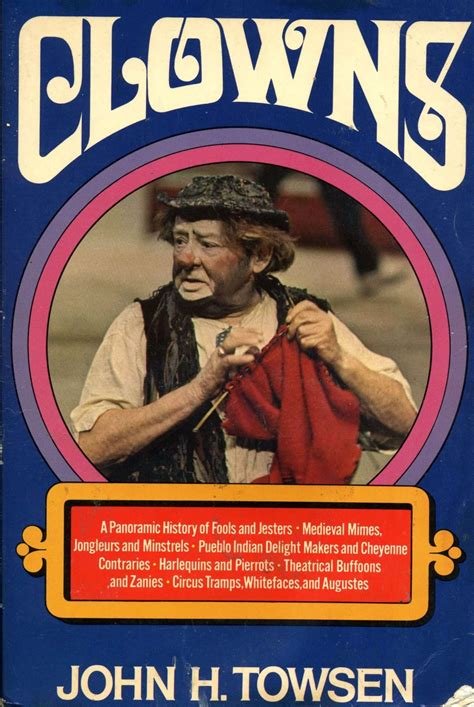
My book Clowns has long been out of print, but you can borrow it for two weeks at a time from the Internet Archive. More information is available here.
My second book (2015)

Visual and verbal humor for the cognitively and artistically curious! Available here.
“A book to treasure!”
—Bill Irwin