Tag: Buster Keaton
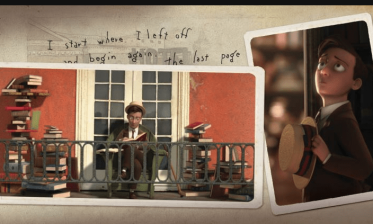
Not only did The Artist score a touchdown for silent films with its five Academy Awards, but the prize for best animated short went to The Fantastic Flying Books of Mr. Morris Lessmore, a movie “inspired, in equal measures, by Hurricane Katrina, Buster Keaton, The Wizard of Oz, and a love for books.” Fans of Buster will recognize the physical resemblance (and the pork-pie hat), but the movie goes further by paying tribute to such stormy Keaton movies as One Week and Steamboat Bill, Jr., as well as to the dance virtuosity of Chaplin’s tramp.
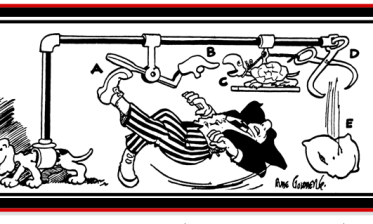
Rube Goldberg was an inventor and cartoonist born the same year as Max Linder (1883), which is to say a few years after Mack Sennett and a few years before Charlie Chaplin and Stan Laurel. He drew popular cartoons of elaborate gadgets that performed simple tasks in the most convoluted way imaginable.
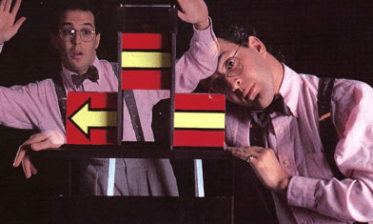
Ben Robinson is both a master magician and an historian of magic, author of Twelve Have Died: Bullet Catching, The Story & Secrets and of The MagiCIAn: John Mulholland’s Secret Life, as well as numerous articles for major magic publications. Just last month, Ben’s decades-long research into the use of magic in silent films came to fruition with publication of his latest book, Magic and the Silent Clowns — a subject that had received scant attention until Ben’s work. Concurrent with that, Ben helped curate a fascinating show at New York’s Museum of the Moving Image entitled Magicians on Screen, including both a magic performance by Ben and a lecture-demo on the subject of magic and the silent clowns. In fact, Ben had first proposed the idea to the museum back in the 80s. Patience is indeed a virtue — though persistence sure helps! This blogopedia is very pleased to be able to share the first chapter from Magic & the Silent Clowns, and to be able to match Ben’s enthusiastic prose with a few video clips.
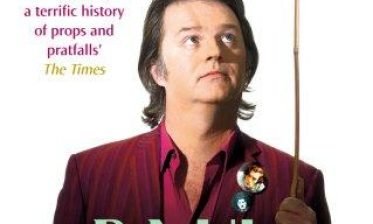
There are a ton of books about silent film comedy, many of them excellent, but they’re not written by performers. Paul Merton, author of Silent Comedy, is on the other hand a popular British comedian — mostly improv and stand-up, rarely silent —with a love for the heyday of slapstick. He has even done several lecture tours on the subject, bringing screenings with live music to theatre festivals and other venues throughout the U.K. In the past two years he has produced two documentaries on early film (not just comedy) for television: Paul Merton’s Weird and Wonderful World of Early Cinema (BBC Bristol, 2010) and The Birth of Hollywood (BBC2, 2011). He has also done an interactive presentation on early British film comedy for the British Film Institute, which you can view online here.
Well, maybe it’s his birthday. The year was 1895 and the day was probably today.
A minor post this one, just a curiosity, but I was pleased to see that Wired magazine, in a discussion of the 2010 dream-catching movie, Inception, discovered a connection with Buster Keaton’s innovative Sherlock, Jr. (1924) — enough of a connection that they did this short piece:
One of these days I’m going to find time to write at some length about my hero Buster Keaton, but meanwhile the Keaton industry is doing just fine without me, thank you very much. There’s a new DVD collection, a new book, and a Monday nights retrospective this summer at the Film Forum here in New York. This outpouring is the inspiration for a lengthy (re-) appraisal of Keaton’s life achievement by Jana Prikryl entitled “The Genius of Buster.” Despite its being written for The New York Review of Books, the article does not over-intellectualize its subject. It’s cogent, informative, and down to earth.
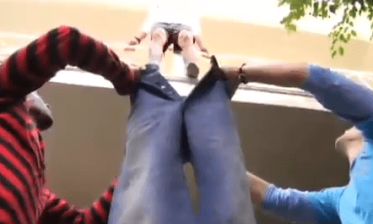
In my previous post, The Fine Art of Impaling Oneself on Heavy Metal Objects, we saw knockabout artists from the past six decades knock into poles, pedestals, platforms, ladders, wire cable and, of course, the ground. This time we take a gentler approach, with a sampling of “quick-change” comedians who have found ingenious ways to get dressed in public and, in the case of a chap named Keaton, an actual reason to do so.
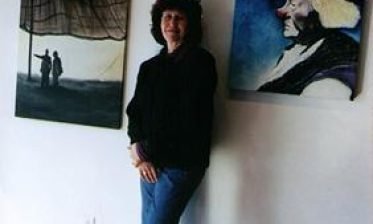
It is a real privilege to be able to present the work of Karen Gersch on this blog. I’ve known Karen for over three decades (though we’re both 29), and she’s quite the Renaissance woman: clown, acrobat, painter, educator, producer — and for all of those three decades New York City’s hostess to ever so many variety artists visiting from around the globe. Karen & I even performed in the Hubert Castle Circus together with Fred Yockers in the late 70s, and I want to say in my defense that any stories she may tell about me from those days are nothing more than wine-induced fabrications. I thought the best way to introduce Karen to the blog was this series of her paintings and drawings of classic clowns. We’ll follow up in later posts with her look at more contemporary clowns, and some of her own performance writing. But first some links:
Karen’s current exhibition at the Blueberry Music & Art House in Greenwich, Connecticut
Karen’s art web site.
Karen’s Showboat Shazzam (formerly Circus Sundays) series at the fabuloso Waterfront Museum (this is last year’s schedule, but check back for this June’s events)
Karen’s Acrobrats performance web site.
The rediscovery and remastering of silent film classics, reintroducing these artists to the public by way of annotated DVD box sets, has been a great gift to the physical comedy fan. First it was Chaplin and Keaton, then Lloyd and Langdon, followed by Charley Chase, Douglas Fairbanks and, most recently, that modern silent clown, Pierre Etaix. And now finally the father of silent film comedy, Max Linder, is being justly celebrated for his pioneering career that spanned over 400 films, about 130 of which have survived, in a handsome 6-disc DVD set complete with historical commentaries and new musical scores by New York’s own Ben Model.
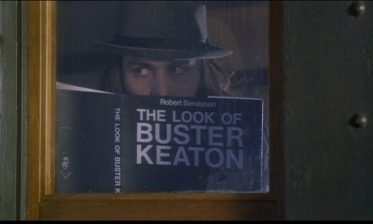
As you’ve probably noticed, the special features that come with DVDs these days are not necessarily all that special. Even when they get into performance issues, editing technique, or visual effects, the information is usually pretty basic. There are, however, some juicy enough tidbits out there for the nibbling, which I was reminded of when I recently chanced to give Benny & Joon (1993) a second look.
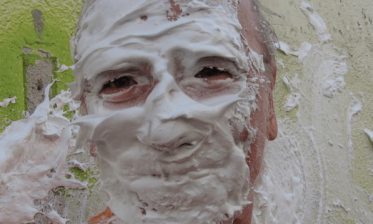
“God always has a custard pie up his sleeve.”
—the character Georgy (played by Lynn Redgrave) in the movie Georgy Girl
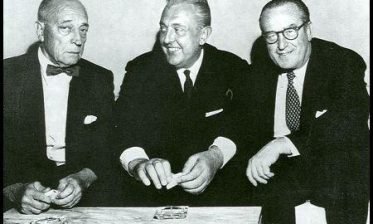
The first movie comedy I saw starred Danny Kaye. I might have been 6 or 7 and I laughed so hard that I still remember thinking, gee, I didn’t know anything could make you laugh that hard. My first Jacques Tati movie was Playtime. I was 19 and in Europe for the first time and, despite a show biz childhood, I had seen little if any silent film comedy. I was amazed. I remember thinking, zut alors, I didn’t know you could do that! It was as if I had discovered a new art form.
TRANSLATE THIS PAGE
Workshops & Other Events
My first book (1976)
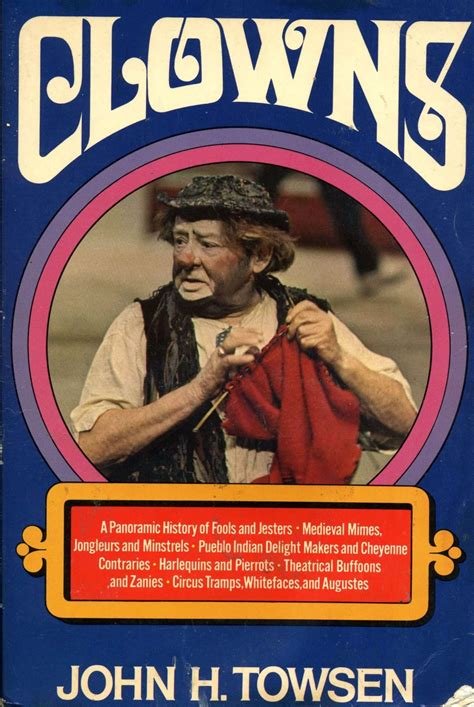
My book Clowns has long been out of print, but you can borrow it for two weeks at a time from the Internet Archive. More information is available here.
My second book (2015)

Visual and verbal humor for the cognitively and artistically curious! Available here.
“A book to treasure!”
—Bill Irwin