Tag: History
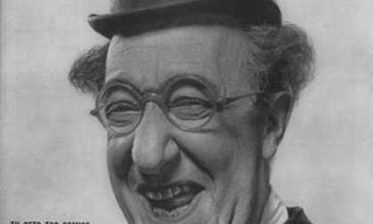
“A comedian is not a man who says funny things. A comedian is one who says things funny.” —Ed Wynn
In honor of the birthday of Fannie Brice (October 29, 1891 – May 29, 1951), the inspiration for the Barbara Streisand musicals Funny Girl and Funny Lady, here’s proof that Brice was indeed quite funny. This is A Sweepstakes Ticket, a skit from the movie revue, The Ziegfield Follies (1946). There’s some great clowning and physical comedy in here by Brice, but also by Hume Cronyn in a rare broad comedy role. William Frawley, an old-time vaudevillian but best known as landlord Fred Mertz on I Love Lucy, is also the landlord here.
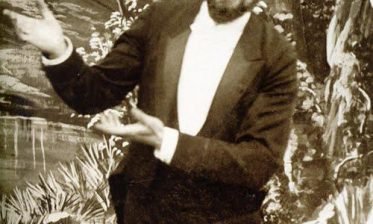
If the name Georges Méliès rings a bell at all, it probably makes you think of that wacky Trip to the Moon movie from the Dawn of Film that was okay in its time, but… that time was long ago. Yes, Méliès almost single-handedly invented special effects, pioneering such techniques as stop-action substitution, dissolves, multiple exposures, and time-lapse photography, in the process creating the science-fiction film genre, but nowadays his corny sense of humor, flimsy storytelling, and overuse of the same gimmicks make the work seem dated. In fact, it was out of fashion by the time the Keystone Cops came on the scene in 1912
So here I go again, launching yet another blog feature that I think will repeat on a regular basis. This is reserved for stuff that’s technically not what I would call physical comedy (and I have a pretty broad definition), but that I think would be of interest to the readers of this blog for one reason or another.
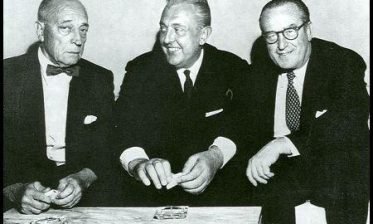
The first movie comedy I saw starred Danny Kaye. I might have been 6 or 7 and I laughed so hard that I still remember thinking, gee, I didn’t know anything could make you laugh that hard. My first Jacques Tati movie was Playtime. I was 19 and in Europe for the first time and, despite a show biz childhood, I had seen little if any silent film comedy. I was amazed. I remember thinking, zut alors, I didn’t know you could do that! It was as if I had discovered a new art form.
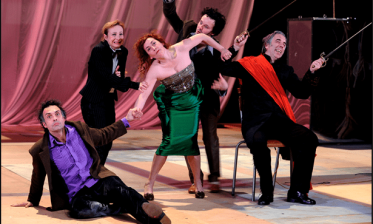
Georges Feydeau’s 1897 farce masterpiece, La Dame de chez Maxim’s (The Lady from Maxim’s), at the Odéon National Theatre here in Paris was sold out this week, but that didn’t stop your intrepid reporter from splurging a whole 3 euros on a rush ticket for a partial view seat in the 2nd balcony. I’m not qualified to write a full-fledged review here, not having read the play in over 30 years and often finding the three and a half hours of French dialogue, as heard from my seat on the fire escape, going too fast for my ears. (Je le lis mieux que je l’écris; je l’écris mieux que je le parle; je le parle mieux que je l’entends.) However, even I could tell the production kicked ass, with especially strong performances from Nicolas Bouchaud as the husband and Norah Krief as a dancer from the Moulin Rouge.
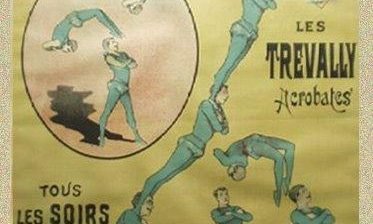
I already threw a lot of stuff at you in post 008 about the comic uses of human pyramids (On the Shoulders of Giants: From the 2-High to the 1200-High). Since then I discovered these two short but very cool clips of the Julians Acrobats from 1902-3. It’s not comedy, but the series of rapid-fire two-high, risley (foot juggling of people), and tumbling moves is fantastic. The clips are similar and very likely shot at the same time, but with some different tricks in each one. You gotta love the group choreography.
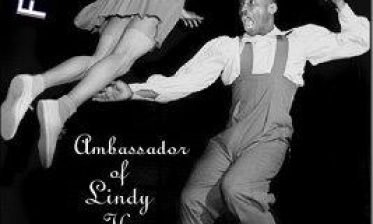
I’m no expert on Frankie Manning or the lindy hop, but both are worth knowing about regardless of any indirect connection with physical comedy. Manning made it to just short of his 95th birthday, active almost to the end, and left behind a lifetime of achievement in developing and popularizing the lindy hop. The NY Times obituary is a good starting point, but also check out the Frankie Manning web site and the Wikipedia entry.
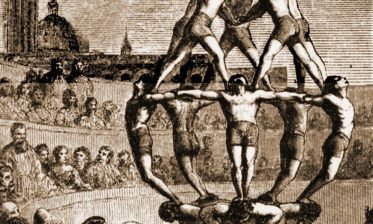
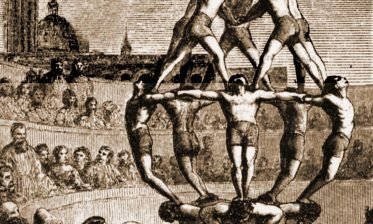
” If I have seen a little further, it is by standing on the shoulders of Giants.”
— Sir Isaac Newton (1676)
All those popular entertainments that we associate with physical comedy — circus, pantomime, street performance, to name just a few — have always been the poor cousins of the so-called legitimate theatre. A few centuries back, when ruling royalty wanted to clamp down on public expression, they only granted theatrical licenses to a couple of theatres, relegating everything else to the streets and the fairground.
As I said in my previous post, I have a bunch of additional material relevant to each of the twelve chapters of Clowns. This is especially true of Chapter 5, because it focuses on physical comedy. In fact, you could view this entire blog as Chapter 5 supplemental material! In addition, I’m still a huge fan of the Hanlon-Lees and I could overwhelm you with stuff on them, but I’m going to wait for the publication this fall of Mark Codson’s book (see below) to dive back into their work.
Finally I get to answer all those questions I’ve been getting for over 30 years!
Chapter 5 from my book, Clowns: A Panoramic History
One more background piece. This chapter from my 1976 history of clowns dealt in detail with the development of physical comedy in the nineteenth century and, ultimately, its influence on American silent film comedy. Good stuff!
TRANSLATE THIS PAGE
Workshops & Other Events
My first book (1976)
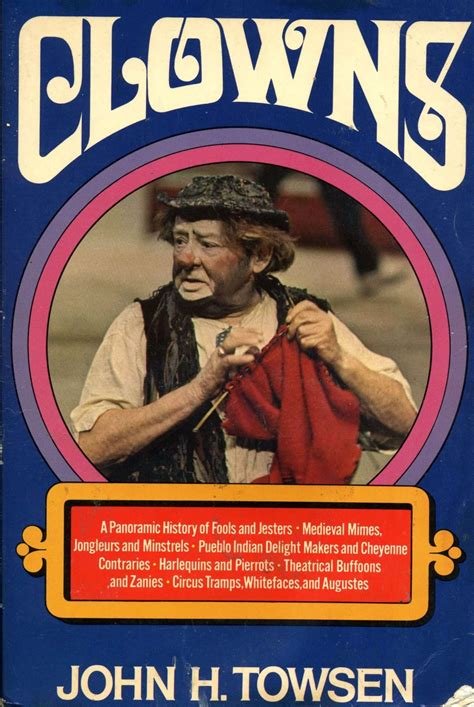
My book Clowns has long been out of print, but you can borrow it for two weeks at a time from the Internet Archive. More information is available here.
My second book (2015)

Visual and verbal humor for the cognitively and artistically curious! Available here.
“A book to treasure!”
—Bill Irwin