List of Posts
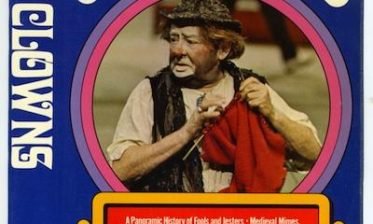
When I started this blog more than two years ago, I thought one thing I would definitely do would be to get my book Clowns, long since out of print, up on the blog so all of you could access it for free. The problem is that doing so involves a lot of tedious work (scanning; optical character recognition; proofreading; layout; etc.), plus I wanted to provide supplementary material for each chapter. Ideally I would rewrite it to improve it (hey, I was 26 at the time!) and bring it up to date, but that possibility will have to wait until I retire, at which point I’ll probably prefer to do something that’s more fun.
I wanted to add this sweet clip of a young Peter Pitofsky to my recent post, Beating Yourself Up for Fun & Profit, because of all the harm he manages to do to himself while trying to start what the audience figures is just another stand-up comedy act. Since he doesn’t actually fight himself, it didn’t quite fit, but here it is as a separate post, a rich example of a clown creating obstacles for himself, in the hilarious tradition of George Carl and Donald O’Connor.
A minor post this one, just a curiosity, but I was pleased to see that Wired magazine, in a discussion of the 2010 dream-catching movie, Inception, discovered a connection with Buster Keaton’s innovative Sherlock, Jr. (1924) — enough of a connection that they did this short piece:

If you’ve ever played around with slapstick or stage combat, and I’m betting you have, you know that the victim’s reaction is key to selling the effect. As my old friend Joe Martinez put it, what we’re doing is Combat Mime, the illusion of fighting, not the painful reality. It’s not surprising, then, that many a comedian has had the clever idea of eliminating the attacker altogether, of playing victim to an imaginary foe.

In the early days of modernism, conceptual artists such as Marcel Duchamp and George Grosz delighted in blurring the line between art and reality. In 1917, Duchamp submitted an upside-down urinal as a work of art, though one obviously lacking in the aesthetic appeal traditionally associated with Art with a capital A. This “found object” was unaltered except for its label. He named it “Fountain.” The piece was rejected by the show’s curator and was soon lost, yet went on to make art history.

Did you ever enjoy a great act in person and then later see it on video and find it flat and nowhere near as exciting? Yes, it’s incredible to be able to watch performances from around the world on our laptop computer or even on a telephone, but still there’s nothing like live performance.
Here I go again with another old-man story (stop rolling your eyes):
Clown friends come to my apartment, look at all my books and DVDs, and are impressed with how much I must know. I do the same thing at my doctor’s office. All those thick volumes line the walls. Surely he’s read them all. He does know what he’s doing, right? Right??

So yesterday my sweetie came home from the hospital on crutches after she and her bike had an encounter with a truck in a Manhattan bike lane. No broken bones, but thanks for asking. Then later in the day Daniel Wallace, game designer and former student, sent me this video.

Or so says the New York Times. A mere five days after a lengthy profile of Cirque du Soleil co-founder and owner Guy Laliberté, which I wrote about in this post, the Times is back with a three-page preview of Cirque’s upcoming debut at Radio City Music Hall, the stage show Zarkana. And though their previews tend to be fluff pieces, the Times is again raising questions about the Cirque’s artistic direction, comparing Zarkana to Spider-Man: Turn Off the Dark and wondering out loud about the caliber of the theatre and clowning components.
You’ve probably already seen most of the mime-y shtick these guys do, but their high energy and inspired silliness make it fresh and funny. Thanks to Jeff Seal for the link.
Jim Moore, whose photography I wrote about in this early blog post, has a new show of clown photos opening tomorrow at Manhattan’s Cornelia Street Café. Since I realize most of you aren’t anywhere near New York City, I’m planning to have a glass of wine in your honor at tomorrow’s opening — one glass per missing blog reader — provided the wine’s free. I also thought I’d show you some of what you’re missing with this preview of photos from the exhibit.

Guy Laliberté, co-founder and owner of Cirque du Soleil, has done well enough for himself to afford to pay $35 million to be a space tourist. Yes, you read that right; yes, out of his own pocket. Not bad for someone who started as an accordion-playing street performer!
TRANSLATE THIS PAGE
My first book (1976)
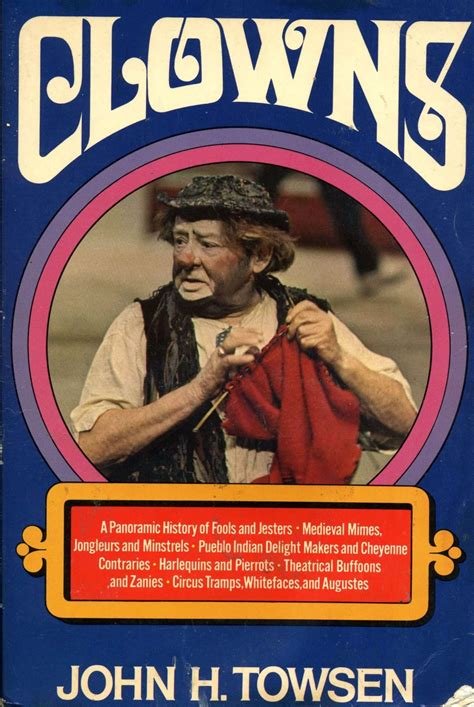
My book Clowns has long been out of print, but you can borrow it for two weeks at a time from the Internet Archive. More information is available here.
My second book (2015)

Visual and verbal humor for the cognitively and artistically curious! Available here.
“A book to treasure!”
—Bill Irwin