List of Posts

Carlo Mazzone-Clementi (1920-2000) single-handedly brought commedia to the United States starting in 1958, teaching widely and founding the Dell’Arte School of Mime & Comedy in 1974, which is still thriving today as the Dell’Arte School of Physical Theatre. A month or two ago, Jim Moore asked me to write a few words about Carlo for a piece he was preparing for his VaudeVisuals blog. This is what I came up with:
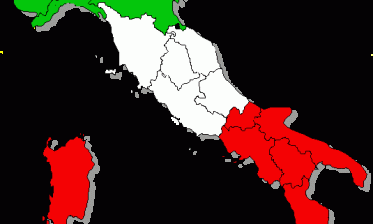
La commedia dell’arte è nata in Italia nel XVI secolo e rimasta popolare sino al XVIII secolo. Non si trattava di un genere di rappresentazione teatrale, bensì di una diversa modalità di produzione degli spettacoli. Le rappresentazioni non erano basate su testi scritti ma dei canovacci detti anche scenari, i primi tempi erano tenute all’aperto con una scenografia fatta di pochi oggetti. Le compagnie erano composte da dieci persone: otto uomini e due donne. All’estero era conosciuta come “Commedia italiana.”


We finally finish our saga of public domain books in English about the commedia dell’arte with these two offerings.
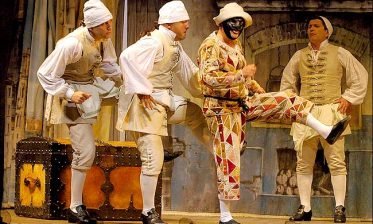
As is often the case, since writing my post on Carlo Goldoni last week — read that post first! — I have stumbled upon a bunch of new stuff that I would have included had I been as wise and knowledgeable then as I am now. The new (to me) material is on Giorgio’s Strehler’s famous production of Arlecchino, Servant of Two Masters. My first stumble was via an Adam Gertsacov post about Strehler on his clownlink.com blog, which led me along a virtual path to two NY Times articles and five more videos.
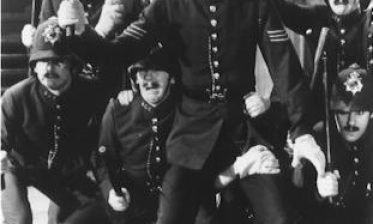
Tony Azito (July 18, 1948 – May 26, 1995) was a New York stage actor who most of you have never heard of because he didn’t have enough in the way of major movie roles before his untimely death from AIDS at the age of 46. I only saw Azito live twice, once in Pirates of Penzance and once in Richard Foreman’s Threepenny Opera. He was that rare combination of highly talented dancer, physical comedian, and character actor, a modern-day Ray Bolger.
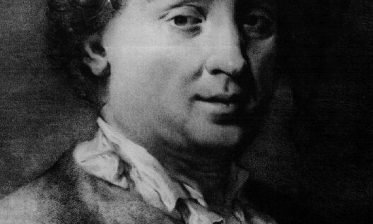
Carlo Goldoni (1707–1793) was the Molière of Italy, the comic playwright who drew upon the traditions of the commedia dell’arte while creating tightly scripted plays. The best known of these is A Servant of Two Masters, a popular choice of modern theatre companies wanting to do a commedia-style show without actually working in improvisational mode.
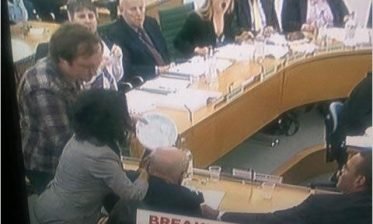
“It is a far better thing that I do now than I have ever done before #splat” — Tweet earlier today by pie-thrower Jonnie Marbles
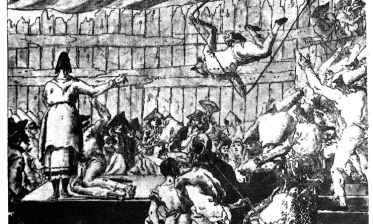
When I was writing Clowns, these were the books I consulted the most for my section on commedia dell’arte:
• Masks, Mimes & Miracles by Alardyce Nicoll
• The World of Harlequin by Alardyce Nicoll
• The Italian Comedy by Pierre Duchartre
• The History of the Harlequinade by Maurice Sand
• Scenarios of the Commedia Dell’Arte by Flaminio Scala
• The Commedia Dell’Arte by Giacomo Oreglia

We interrupt this program of free and complete books about the commedia dell arte that you probably don’t have time to read to present an emergency broadcast of a decidedly more modern diversion. Step right up and take a gander at the Robot Juggler, a product of the Czech Technical University’s Department of Control Engineering (Prague). Yes, I did say robot. Thanks to Riley Kellogg for the link!
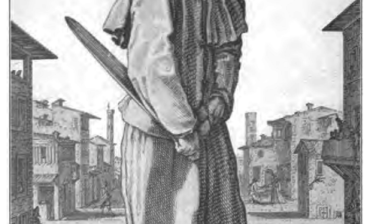
Because the essence of commedia dell arte was improvisation, recreating it for the modern reader has always been a tough task for scholars, and because it never pretended to be great dramatic literature, it didn’t get much interest from theatre historians or practitioners until the early 20th century. This started to change with directors like Copeau and Meyerhold, who took commedia as inspiration for a new approach to actor training, and modern art movements such as dada, futurism, and surrealism, that were less interested in literature than in the spontaneous theatrical event. Winifred Smith, one of the first commedia scholars from this period, was also a translator of futurist plays, and apparently quite a pioneer in her day. Here’s her bio from the web site of her alma mater, Vassar College, a prestigious women’s college that didn’t go co-educational until 1969:
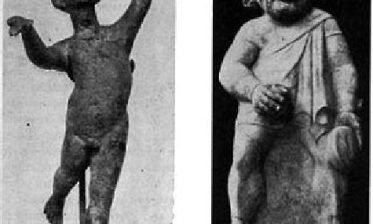
Histories of ancient theatre tend to leave the impression that comedy began with Aristophanes, but Greece already had a rich tradition of commedia-style performance — the Dorian mimes (image, above). As I wrote in chapter two of Clowns…
These Dorian clowns— as well as the short plays they performed —came to be known as
mimes (mimos). Today mime is usually equated with pantomime, the art of silent acting, but originally the word meant “to imitate” and referred to the performer’s talent for caricature; the ancient mimes were in fact quite talkative. Much of the dialogue apparently was improvised, and since the actors saw little need to preserve in writing what was said on stage, these comic dramas never became dramatic literature.

I’m about to overwhelm you with a slew of free, complete books related to the history of clowns in the theatre — and, yes, I expect you to read every single word of every single book —but for now I’ll be happy if you just read the next paragraph:
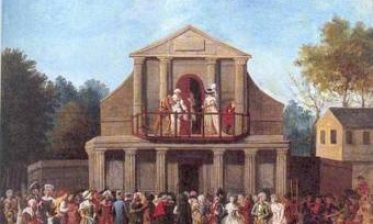
Chapter two (previous post) covered a lot of ground — about twenty centuries and at least four continents — so there’s a ton of potential supplementary material. I’ll just throw a few at you here, and then follow up in my next posts with some free books.
TRANSLATE THIS PAGE
My first book (1976)
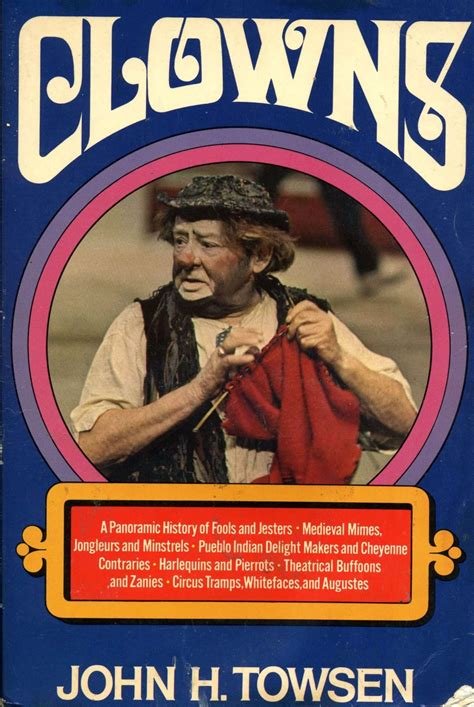
My book Clowns has long been out of print, but you can borrow it for two weeks at a time from the Internet Archive. More information is available here.
My second book (2015)

Visual and verbal humor for the cognitively and artistically curious! Available here.
“A book to treasure!”
—Bill Irwin