List of Posts
Surely you’ve heard of planking? Quite the fad. But so far this is my favorite!
An excerpt from the full-length show, introduced by Angela Lansbury. Great stuff, even if they lost out to Wendy Wasserstein’s The Heidi Chronicles. Thanks to Jango Edwards for the link.

Associated Press, Caracas: Mimes gesture as they stand in a crosswalk in Caracas, Venezuela, Friday Oct. 7, 2011. The mayor of the city’s eastern district of Sucre has launched a unique program aimed to encourage civility among reckless drivers and careless pedestrians, putting 120 mimes at intersections to politely and silently scold violators. The campaign kicked off this week as mimes posted at busy intersections mocked people who jaywalked or acted brutish behind the wheel. (AP Photo/Ariana Cubillos)
Post #200. Wow! I thought I was getting out of this business, but I guess the money’s just too good. (Yes, that was sarcasm.)
In The Art of Laughter, which I reviewed three posts ago, Jos Houben tells you what’s funny, performs something to illustrate his theme, and then we do indeed laugh. All pretty straightforward. But there’s another kind of physical comedy lecture-demo featuring a less trustworthy narrator, where there’s a disconnect between lecture and demo, between our host’s pretentious words and silly actions.
Here’s an interesting clip of Jackie Chan explaining how he enhances some of his less spectacular falls.
Well, maybe it’s his birthday. The year was 1895 and the day was probably today.
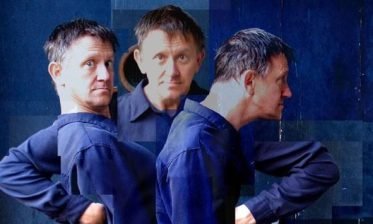
It takes more than a little bravery to tell an audience outright that you are going to explain to them how comedy works and that you intend to make them laugh a lot in the process, even suggesting that they don’t have much choice in the matter. But if they don’t laugh, you lose on two counts. And it takes a lot of talent, training, and practice to pull it off as well as Jos Houben did Tuesday night in New York at an evening hosted by the Alliance Française as part of their Crossing the Line performance series. Yes, lots of laughs and a standing ovation.

Yep, that’s what Wikipedia says: “Physical comedy, also known as slapstick…” And if you go on the Discussions page for their physical comedy entry, you read “I propose this article to be merged with the Slapstick article. There are a lot of information on this article that is much the same in the slapstick article, and hence redundant. In my opinion, the two articles will be more informative and detailed when merged.”
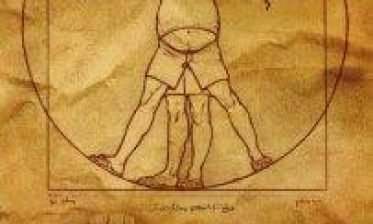
In case you haven’t noticed, I think clowns and physical comedy are like totally RELEVANT and SIGNIFICANT in our modern world because we’re all still pretty dumb at least part of the time, though we’re less likely to admit it, and human error is still titanically inevitable. Which is what clowns have been telling us for several millennia, and the only good news is that we’re still able to laugh about it. So if you need to justify your clown existence to an annoying “friend” or to that condescending uncle, read and steal these quasi-intellectual arguments I wrote about here and here.
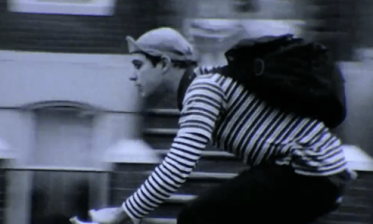
This post is not mere shameless self-promotion, at least not entirely. This Friday night (Sept. 16th) at 10 p.m., Audrey Crabtree and I will be co-hosting a presentation of short clown films at the NY Clown-Theatre Festival at the Brick Theater in Williamsburg, Brooklyn. And you should come, because we’ll be lonely without you, plus it’s going to be pretty exciting. Here’s why…

Two compilations of “doing it all wrong” moments taken from tv commercials that promise to fix all that.
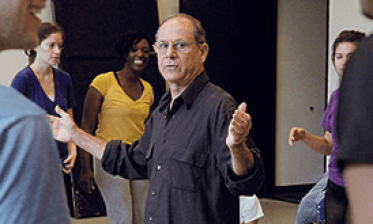
The notion that physical comedians and other movement artists might have something to teach traditional actors goes back at least a century, when such innovative directors as Jacques Copeau in France and Vsevolod Meyerhold in Russia hired accomplished clowns and variety performers as guest instructors. In the United States, this became a trend in the 60s and 70s as “experimental” theatres sought to break the confines of the fourth wall and Stanislavski method acting to forge more theatrical performance styles.
TRANSLATE THIS PAGE
My first book (1976)
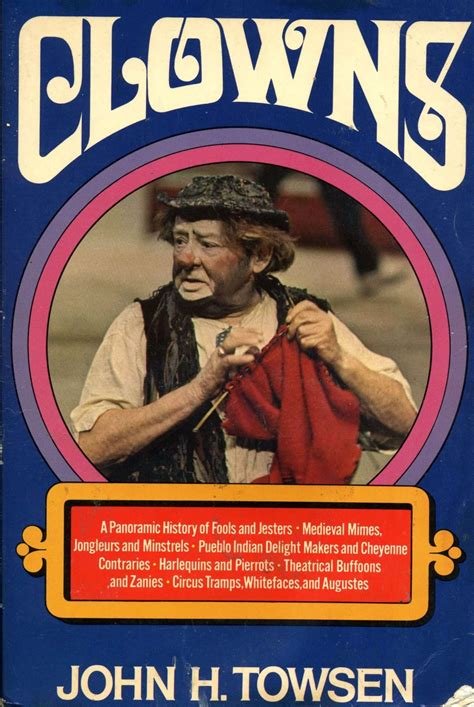
My book Clowns has long been out of print, but you can borrow it for two weeks at a time from the Internet Archive. More information is available here.
My second book (2015)

Visual and verbal humor for the cognitively and artistically curious! Available here.
“A book to treasure!”
—Bill Irwin