Tag: France
OK, this one’s no more than a curiosity, but since we’re still on the subject of Linder….
If I’ve convinced you in my recent posts that Max Linder is worth knowing about, then you might want to read more, no? But when it comes to books (you remember books) there’s still nothing in English devoted entirely to Linder, and the two books in French are both by his daughter, Maud Linder. Luckily, they’re excellent and it would be great to see them translated into English.
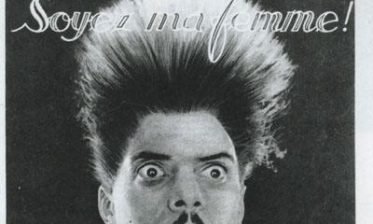
The rediscovery and remastering of silent film classics, reintroducing these artists to the public by way of annotated DVD box sets, has been a great gift to the physical comedy fan. First it was Chaplin and Keaton, then Lloyd and Langdon, followed by Charley Chase, Douglas Fairbanks and, most recently, that modern silent clown, Pierre Etaix. And now finally the father of silent film comedy, Max Linder, is being justly celebrated for his pioneering career that spanned over 400 films, about 130 of which have survived, in a handsome 6-disc DVD set complete with historical commentaries and new musical scores by New York’s own Ben Model.
We may know Max Linder as the first truly international film star, the father of silent film comedy, but he was also a playwright and stage comedian whose live performances drew mobs every bit as frenzied as those that later greeted Chaplin, Sinatra, and the Beatles. What is most compelling about his stage work, however, is his innovative combination of film and live performance, the details of which you’ll have to read Mr. Bren’s article to discover! And click here to visit Mr. Bren’s web site.
Supposedly I’m a big expert on all this clown and physical comedy stuff. Yeah, like I actually have the time to watch all those DVDs overcrowding my shelves.
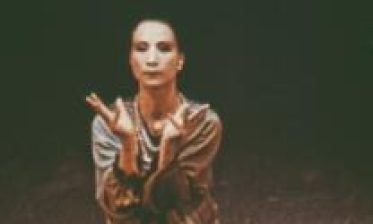
“Live from Paris” last April, that is, where I was already undercover on the Linder and Etaix capers when I got a coded message from one Michael Evans, an operative unknown to me but apparently a go-between for a character from the 70s who at that time went by the unassuming name of Lou Campbell. I was in Paris, I had nothing better to do (hah!), and before I could say fromage I’d been given the assignment to track down legendary Japanese pantomimist Mamako Yoneyama, rumored to be hiding out in that City of Light Mimes. Evans (if that’s his real name) had first met Yoneyama — code name Mamako— at the 1974 International Mime Festival at Viterbo College in Lacrosse, Wisconsin, organized by yet another “Lou Campbell.” Or was he in fact the same person?? Evans’ rambling confession about that festival — an event whose foreign ideas about movement theatre forever corrupted the minds of a whole generation of impressionable Americans in tights —has finally been released thanks to the Freedom of Information Act, and now the general public can view it here, including incriminating sketches and notes such as these:
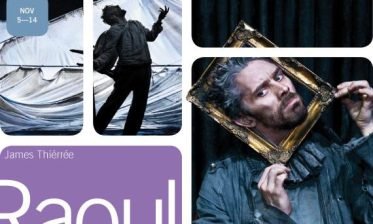
As the lights went down at the end of the final performance of James Thiérrée’s Raoul at the Brooklyn Academy of Music this afternoon, the entire audience immediately jumped to its feet to give him a rousing standing ovation. And yet the New York Times review argued that “the charms of Raoul the show quickly wear thin.”
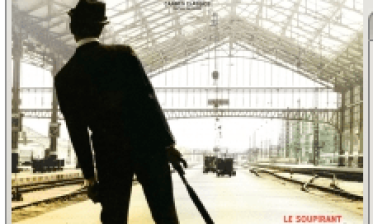
We last left Pierre Etaix (post 99) with the happy news of the legal triumph that restored his rights to his own films, paving the way for their reappearance in film festivals and, ultimately, their DVD debut. Now that I’m back on the case, I thought I should try to find out how much of that has actually come to pass since my May 19th post. Here’s the scoop:
• A restored version of Etaix’s Le Grand Amour was shown at this year’s Cannes Film Festival.
• Restoration of the entire Etaix ouevre was completed this July by the Technicolor Foundation and the Groupama Gan Foundation. Click here for details.
• At least four of his films are being screened this week at the Cinémathèque Québécois in Montreal. Click here for an article from the Montreal Gazette.
• A September DVD release of the collected works, Intégral Pierre Etaix, was said to be forthcoming from Carlotta, but their web site was only promoting live screenings and video on demand, and the VOD was only available in France
• So I wrote Carlotta and this morning heard back from them that it is Arte, not Carlotta, that is releasing the entire collection — and it’s due out next week! Click here to link to Arte’s Etaix page. As of today, they are not yet taking orders, but the release date is set for November 2nd. So, yes, I will get my order in and try to post a review to your favorite physical comedy blog as soon as I can work my way through the nine hours (!) of material.

Don’t quote me, but it’s a small world after all.
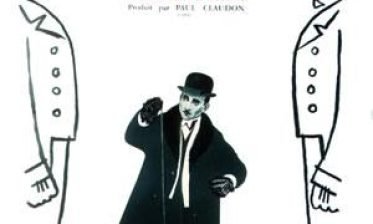
The year was 1973 and I was a student at Ringling’s Clown College where, as part of the training, dean Bill Ballantine screened comedy films. Yes, this was the Dark Ages, still several years before the first VHS tapes and a full two decades before DVDs. I fondly remember sitting with the likes of Penn Jillette, Michael Davis, and Mike Bongar, devouring the works of W.C. Fields, the Marx Brothers, and other classics. One delightful oddity that caught my attention was a modern-day silent film comedy, Yoyo (1965), directed by and starring the French renaissance man, Pierre Etaix. Although Jacques Tati — another French master of the modern silent film — was to complete his last feature film the next year (Parade, 1974), neither he nor Etaix were exactly household names in the United States.
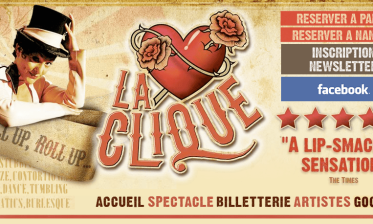
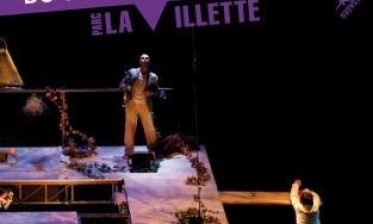
Life is a cabaret, old chum, so willkommen-bienvenu-welcome to La Clique, an intimate cabaret of burlesque comedy and circus, delivered in a mix of French and English, and performed mostly on a tiny circular stage set in the midst of an audience that is never more than about ten meters away. The show has roots in Australia but was first seen as a fringe offering at the 2004 Edinburgh festival. It has since enjoyed extended runs in the capitals of the world, with many of the same acts intact. I finally caught up with it at the Théâtre Bobino in Paris, and found a lot to like.
I’ve always been a big circus fan, but I have to admit that somewhere along the way I began to tire of the same old acts done the same old way. Tradition is fine and to be seriously respected, but watching performers — be it a hand balancer, a solo trapeze artist, or a clown — do what everyone else is doing, time after time, proved downright dispiriting. Did “classical circus” have to be devoid of creativity? And if a true believer like me often found himself bored at ringside, I suspect many a secular spectator was left with the feeling that “if you’ve seen one, you’ve seen them all.”
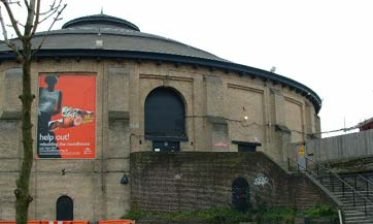
I blazed through London for three jet-lagged days on my way to Paris, and managed to catch part of a circus festival (ongoing through May 16th) at the Roundhouse Theatre in fashionable Camden Town.
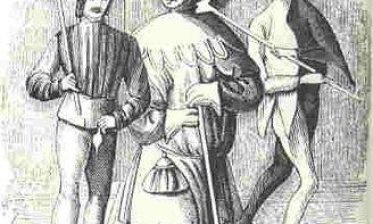
Fous et Bouffons: un Etude Physiologique, Psychologique et Historique (Fools & Buffoons: A Physiological, Psychological, and Historical Study)
by Dr. Paul Moreau
TRANSLATE THIS PAGE
Workshops & Other Events
My first book (1976)
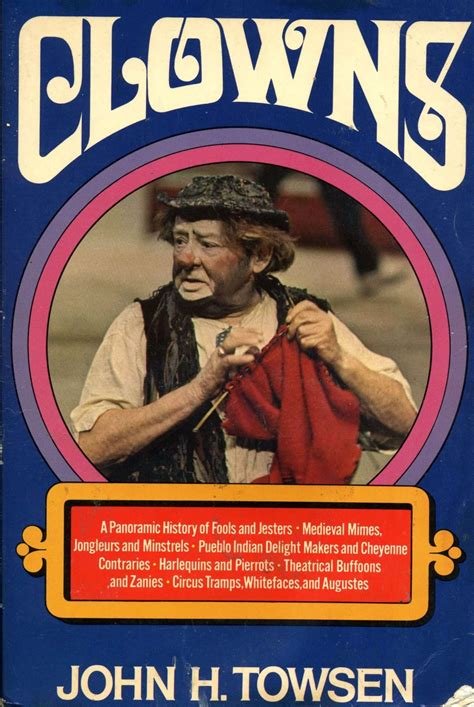
My book Clowns has long been out of print, but you can borrow it for two weeks at a time from the Internet Archive. More information is available here.
My second book (2015)

Visual and verbal humor for the cognitively and artistically curious! Available here.
“A book to treasure!”
—Bill Irwin